
The first team meeting: expectations and agreements
Almost every February team crisis traces back to a conversation that wasn't held in September. The first team meeting — one evening, no balls — is the cheapest insurance a coach can take out.
Why before the first match
Agreements made while nothing is at stake are principles; agreements made after the first incident are accusations. A coach who settles how playing time works in September doesn't have to convince anyone in November — the agreement was there before the disappointment. So schedule the meeting in the preparation weeks, as part of your season setup.
The agenda for the evening (90 minutes)
- The goal (30 min): formulate the team goal together — everyone writes, you cluster, you choose together.
- The agreements (40 min): the four topics that cause tension every season, settled now:
- Attendance: what's the standard, how do you call off, what does being late mean?
- Playing time: which criteria apply — see dividing playing time fairly?
- Communication: the calendar leads, feedback goes directly to each other instead of through the grapevine.
- The record-keeping: what you track and why — players who understand what the data is for will carry it.
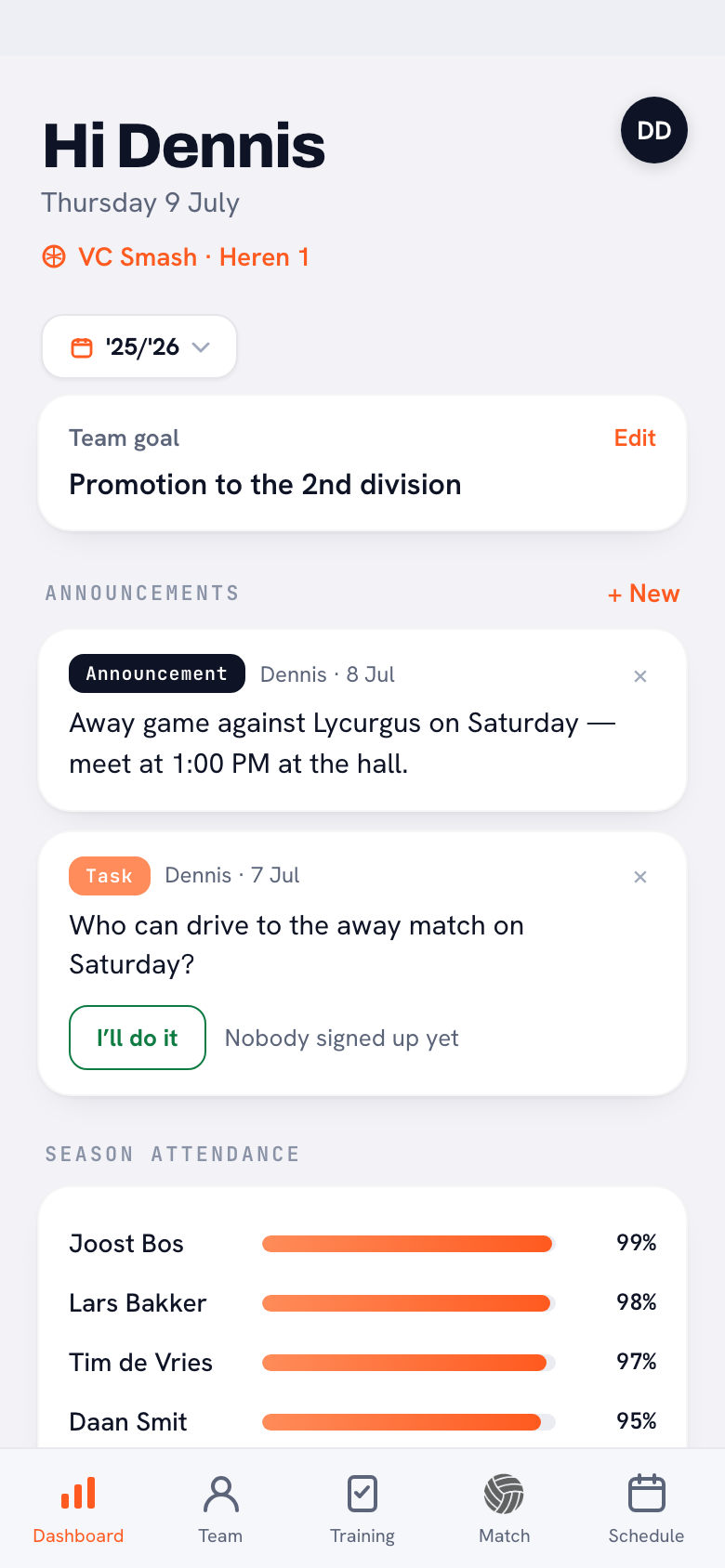
- Putting it in writing (20 min): goals into the app, agreements in three to five sentences on paper to everyone.
The tone: your framework, their input
The trap is running the evening as a one-way lecture ("these are my rules") or as a non-committal social. What works: you set the topics and the minimum standard, the team fills them in. "There will be an attendance standard — which one do you think is fair?" produces a standard the team enforces itself. Agreements players helped formulate, you rarely have to enforce.
Repeat the key agreements at the winter break. One slide, five sentences, two minutes: 'this is what we agreed — does it still stand?' New players are on board and old agreements stay everyone's property instead of becoming September folklore.
Frequently asked questions
What if players think the meeting is over the top?
Keep it short, concrete and a one-off — 90 minutes with drinks afterwards. The scepticism disappears in November, at the first playing-time conversation that's settled in two minutes because the agreement was already in place.
Should I involve parents with a youth team?
Separate moment, same principle: share expectations about playing time, development over results and the role of the data upfront. Ten minutes after the first practice saves a season of sideline debates.
What do I do with a player who questions the agreements later on?
Point back to the moment and stay open to revision at the right time: 'the agreement stands until the winter break, then we evaluate it'. Agreements aren't set in stone — but renegotiating per incident is the end of every agreement.
Try it yourself in Koach
Less admin, more coaching — starting at your next practice.
Get started with Koach