
Setting and tracking season goals with your team
In September every team has goals; by March nobody remembers them. The difference between teams where goals work and teams where they evaporate isn't in the wording — it's in the system around them.
The goal pyramid: three layers that carry each other
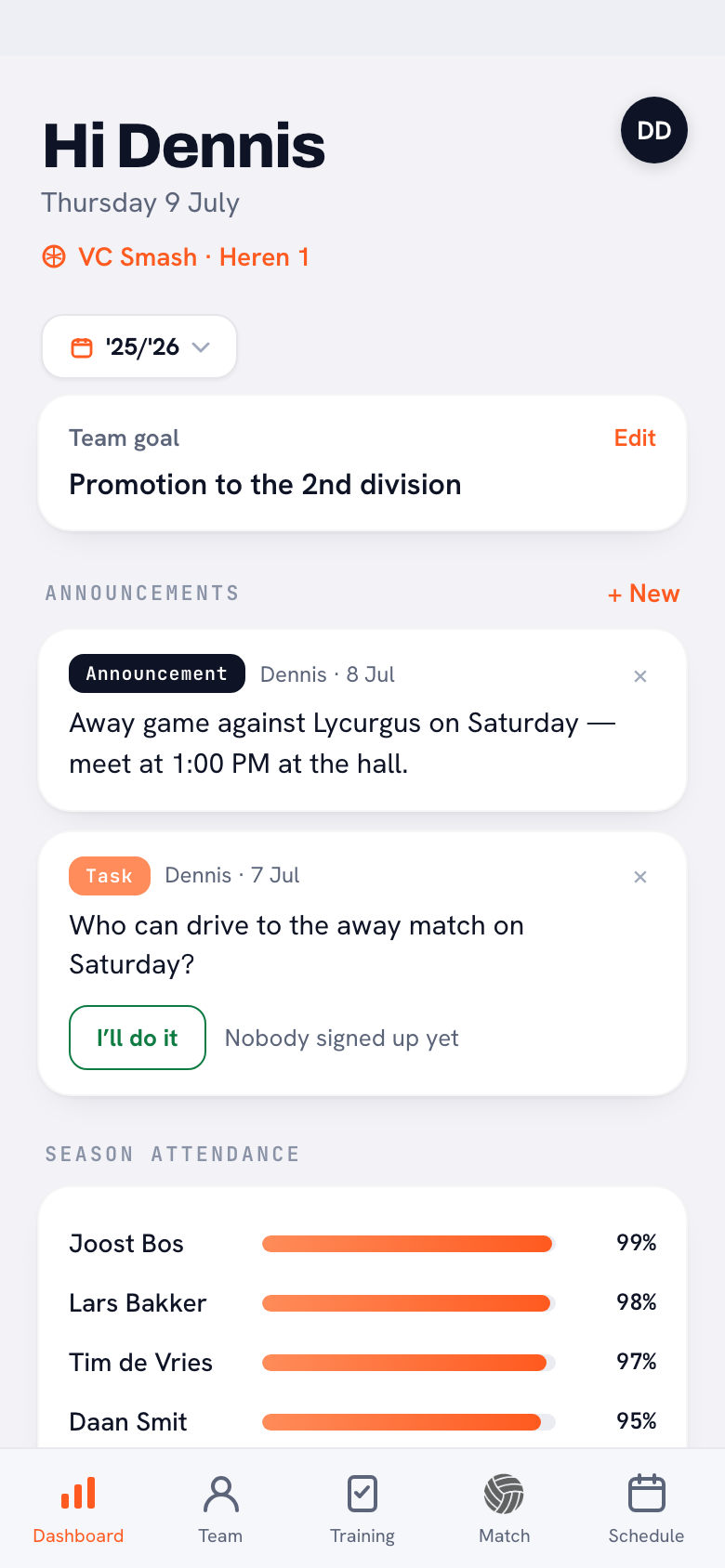
- The results goal (one): what the season is aiming for — promotion, top 3, staying up. This is the team goal that sits on the dashboard.
- The behaviour goals (two or three): what you do every week to get there — "at least 80% practice attendance", "record every match in full", "end every practice with pressure drills". Fully within your own control, so always achievable.
- The personal goals (one per player): each player goal chosen so it feeds a behaviour goal or the results goal.
The pyramid works because the layers explain each other: whoever asks "why does attendance need to hit 80%?" gets the results goal as the answer; whoever asks "how are we going to get promoted?" gets the behaviour goals.
The tracking rhythm
Weekly (30 seconds): the dashboard check — are the behaviour goals on track? Monthly (5 minutes): one moment with the team: "attendance is at 82% — on course". Winter break (one evening): the recalibration — is the results goal still realistic? Are the behaviour goals still the right ones? See making the most of the winter break. Goals don't need more supervision than this; on less, they don't survive.
When the goal drifts out of reach
If you're rooted to the bottom of the table in January while the goal was promotion: recalibrate out loud. A team that clings to a dead goal stops believing in all goals. Replace the results goal ("win more sets in the second half of the season than in the first") but keep the behaviour goals intact — they never depended on the standings anyway.
Celebrate the behaviour goals, not just the result. Hit the 80% attendance in a losing month? Name it and celebrate it. Teams that only celebrate results learn that effort doesn't count — exactly the opposite of what a season needs.
Frequently asked questions
How many goals can a team handle?
One results goal, two or three behaviour goals and one personal goal per player. Anything beyond that competes for the same attention and loses.
Who sets the goals — coach or team?
Together, with a division of roles: the team supplies the ambition (results goal), the coach translates it into behaviour (behaviour goals) and guards feasibility. Goals the team doesn't own won't make it to November.
What is a good behaviour goal for a mid-table team?
Something measurable every week that directly touches better volleyball: attendance percentage, record-keeping discipline, or a practice agreement like 'one pressure block every week'. The data you're already tracking is the yardstick.

Try it yourself in Koach
Less admin, more coaching — starting at your next practice.
Get started with KoachOr read first what the volleyball coaching app does.