
Distributing playing time fairly with objective data
No topic produces as much resentment as playing time — because every bench player invents their own explanation as long as the real one is missing. A fair playing time policy is not an equal distribution; it is an explainable one.
Fair is not equal — fair is explainable
In a competitive team the better player may play more; in a youth team everyone should get generous minutes (see youth development). What both have in common: the criteria must be known in advance and verifiable afterwards. The resentment is never about the bench itself — it is about the feeling that the bench is arbitrary.
The three data pillars under playing time
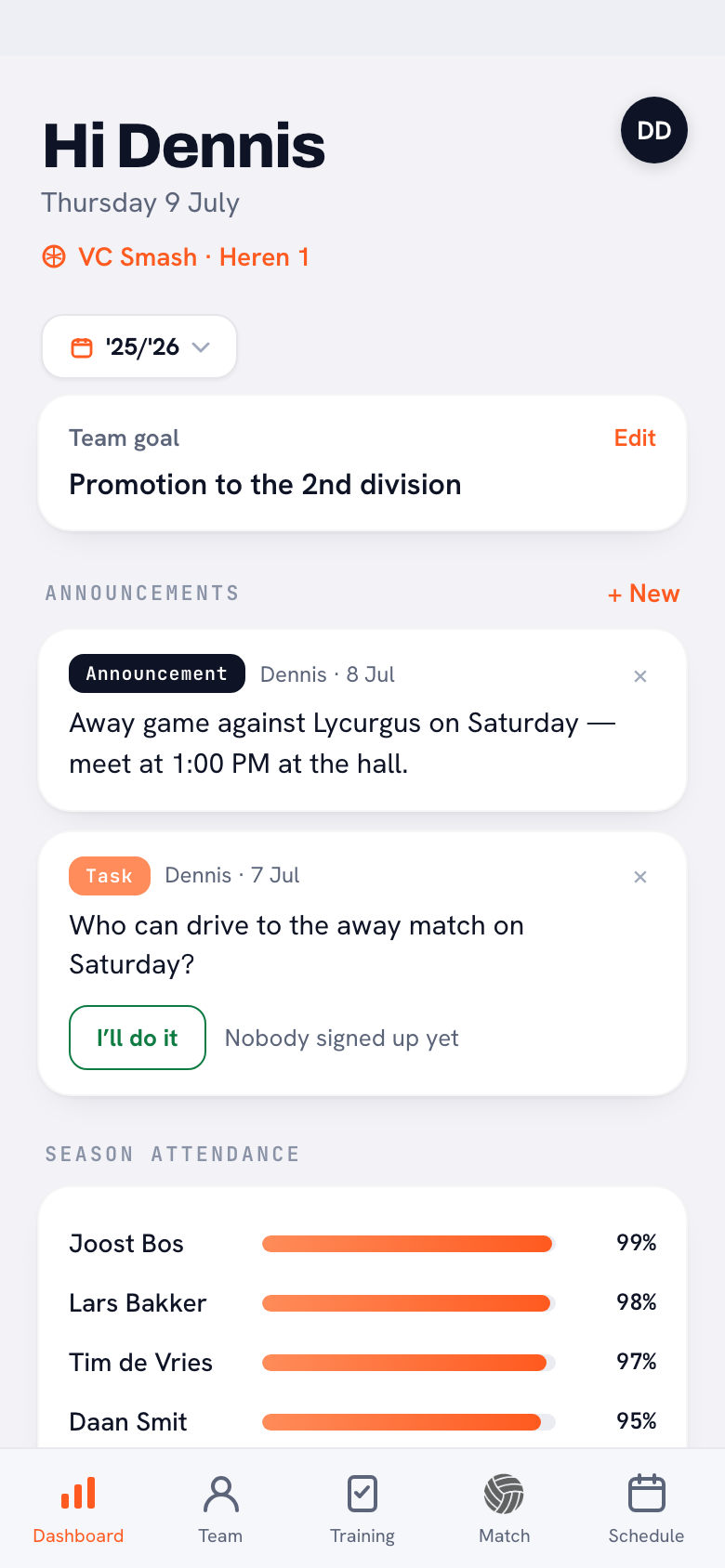
- Attendance: whoever shows up to practice builds up rights. "You were at 9 out of 10 practices, he was at 5" — no argument possible. The attendance records are your foundation.
- Effort: being there is not enough; the effort scores make visible the difference between being present and pulling hard.
- Performance in their role: the match numbers — read with context and over a period, as described in reading statistics.
The policy in practice
Make it explicit at the start of the season — three sentences will do: "Whoever trains and works, plays. When suitability is equal, attendance wins. And everyone gets at least [x] per match/month." Record it with your team agreements. After that, every individual question ("why am I sitting?") is a two-minute conversation with the screen in hand, instead of a smouldering fire in the group chat. And the measuring itself is no longer your job: the playing-time fairness meter automatically tracks court time per player in every live-scored match.
Check yourself monthly. Coaches have blind spots and favourites too. Look at the actual distribution once a month: do your minutes match your own policy? The data does not just check the players — it checks you.
Frequently asked questions
Should I track playing time to the minute?
It does not need to be that precise: sets played per match already gives a fair picture. It is about the pattern over weeks, not sub-minute bookkeeping.
What do I do with a top player who trains poorly?
Whatever your policy says — and that is exactly why you set it down in advance. A coach who applies the rule 'whoever trains, plays' only to bench players loses the whole system's credibility.
How do I explain a reserve role to a disappointed player?
With the three pillars on the table, a concrete development goal and a moment when you will look at it again together. A bench with a route back is bearable; a bench without explanation or perspective is not.
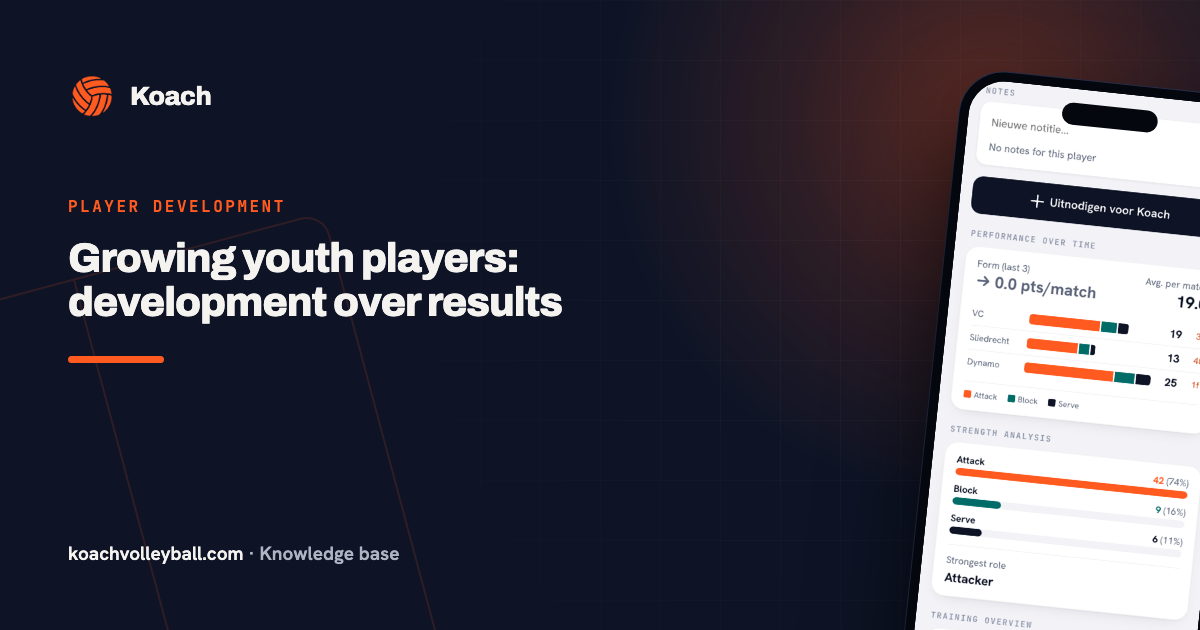 Growing youth players: development over results
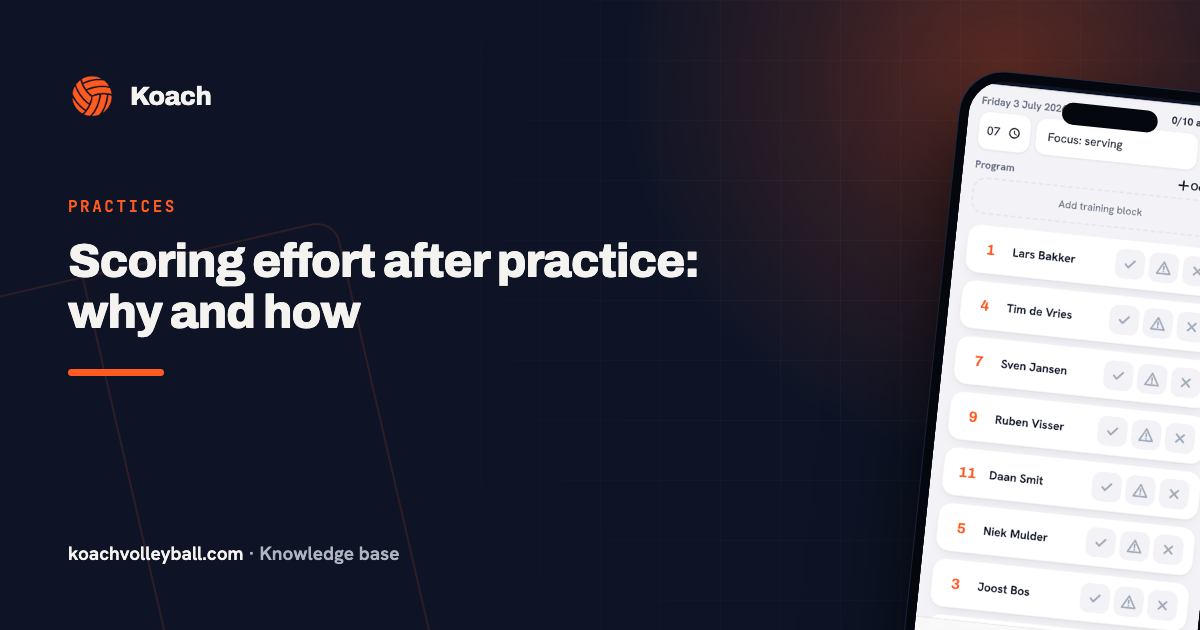 Scoring effort after practice: why and how
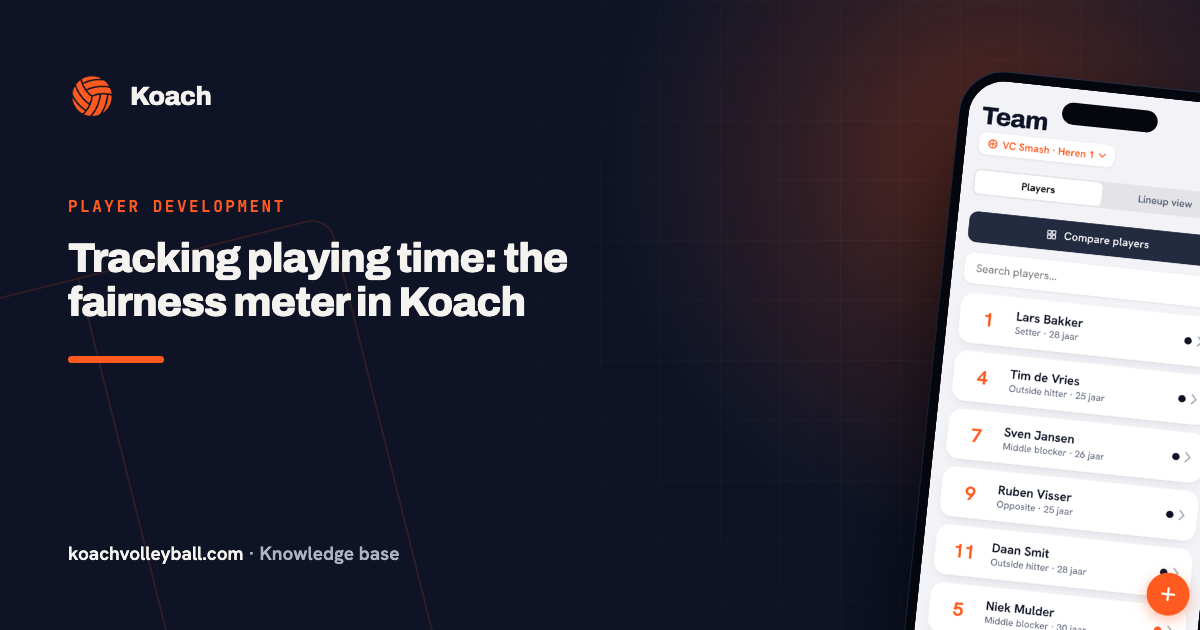 Tracking playing time: the fairness meter in Koach
 Dealing With Difficult Parents as a Coach: What to Do Courtside
 The Bench Player: What to Do With Someone Who Barely Plays
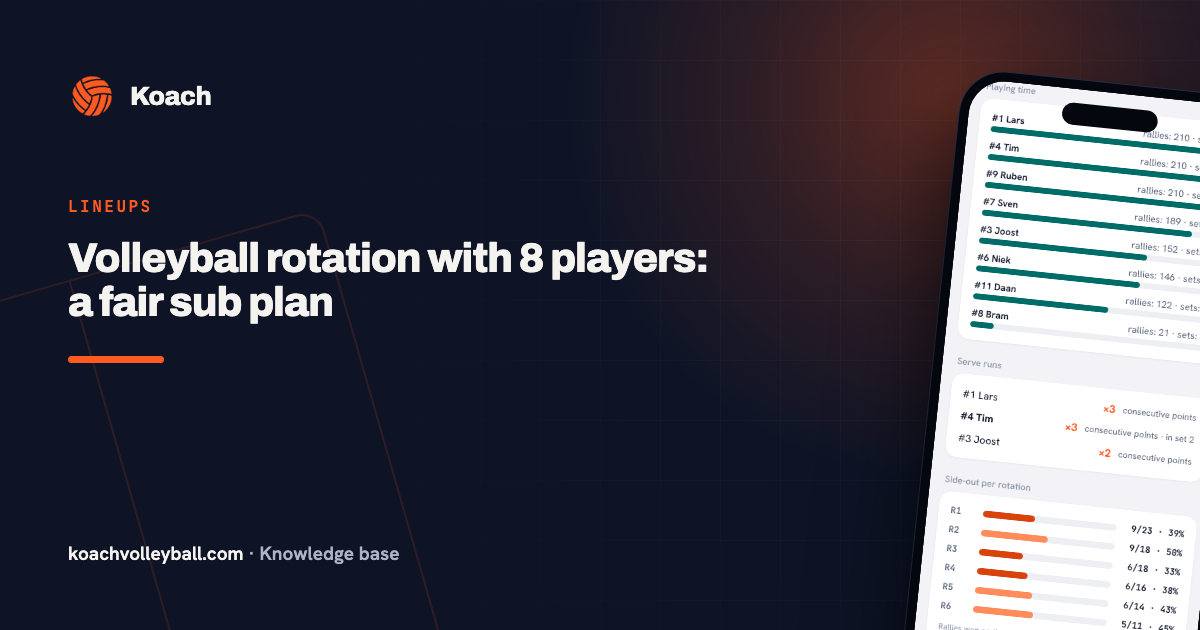 Volleyball rotation with 8 players: a fair sub plan
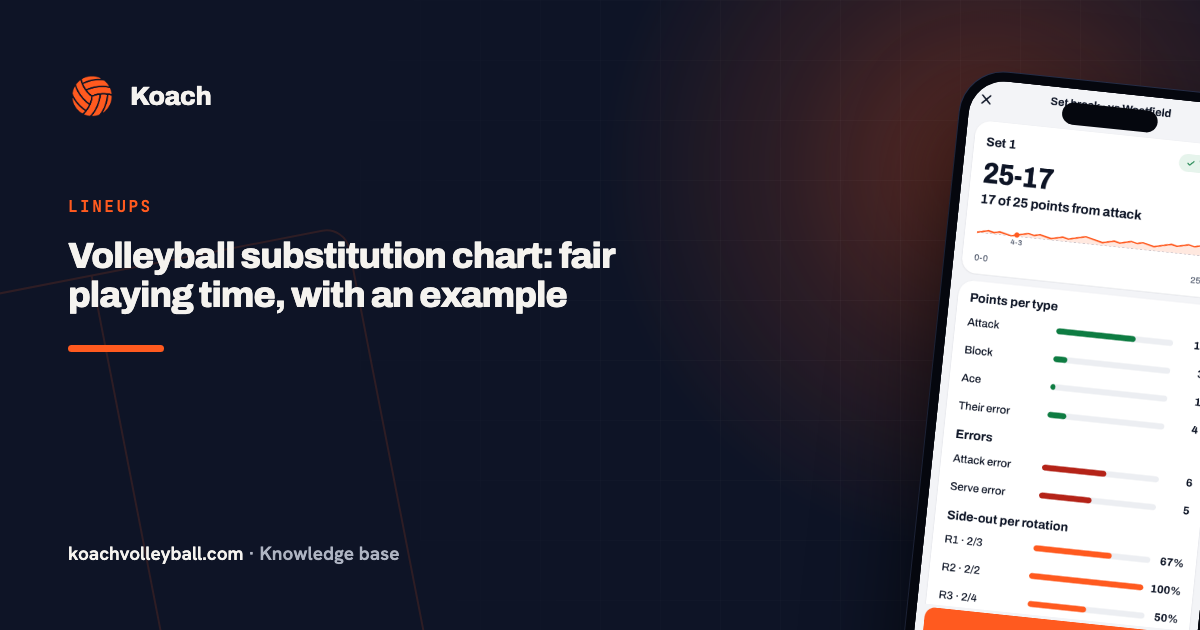 Volleyball substitution chart: fair playing time, with an example
Try it yourself in Koach
Less admin, more coaching — starting at your next practice.
Get started with KoachOr read first what the volleyball coaching app does.