
Volleyball positions explained: from setter to libero
Setter, opposite, middle, outside, libero — to outsiders it sounds like jargon, to a coach it is the blueprint of the team. This article lays out all the positions, with their tasks and typical player profiles.
The five roles in brief
Setter. The playmaker. Plays virtually every second ball and decides who attacks. Requires game insight, quick feet and composure under pressure. More about this role: the setter explained.
Outside hitter. The all-rounder. Attacks from the left side and carries the serve receive. Often your most complete players — they do everything: pass, attack, defend, block.
Middle blocker. The tower at the net. Runs quick attacks through the middle and is the first line of defence against the opponent's attack. Height and timing are gold.
Opposite. The finisher. Stands opposite the setter and gets the balls that have to be put away — including the bad ones. Often the team's top scorer.
Libero. The defensive specialist in the contrasting shirt. May only play in the back row, cannot serve and cannot attack above net height. The rules are a story of their own: everything about the libero.
How many players do you need per position?
A typical match roster of 10–12 players contains: 2 setters, 4 outside hitters, 2–3 middle blockers, 1–2 opposites and 1 libero. How to build that is covered in building your roster.
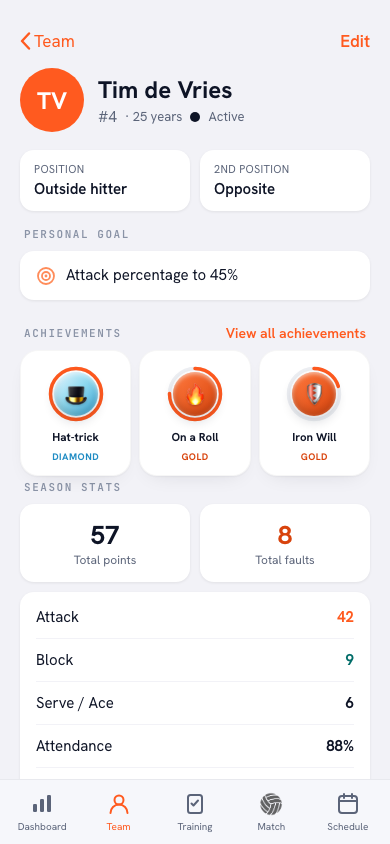
Recording positions in your team
In Koach you pick a main position per player and optionally a second position. That choice carries through the rest of the app: when building your lineup you immediately see who fits where, and in the statistics you can compare performance per role — is your opposite scoring what an opposite should score?
For youth coaches: do not pin young players to a single position too early. Let everyone play everything until around age fifteen and treat the position field as a snapshot, not a label.
Frequently asked questions
What is the difference between an opposite and an outside hitter?
The outside hitter attacks on the left and passes in serve receive; the opposite attacks on the right, stands opposite the setter and is usually kept out of serve receive so they can focus on scoring.
Can a team play without a libero?
Yes, a libero is not mandatory. Especially in youth and lower-level senior teams, playing without one is common. It does cost you defensive stability in the back row.
Which position do I give my tallest player?
Usually middle: that is where the block and quick attacks count the most. But timing and explosiveness matter more than raw height — a tall player with slow footwork is sometimes more valuable in the back row.

Try it yourself in Koach
Less admin, more coaching — starting at your next practice.
Get started with Koach