
Lining up against a strong attacker: organising the block
Every pool has one: the attacker who decides sets on his own. 'Just trying to block him' is not a plan. An organised block starts with your lineup — days before the match.
Step 1: know where he is
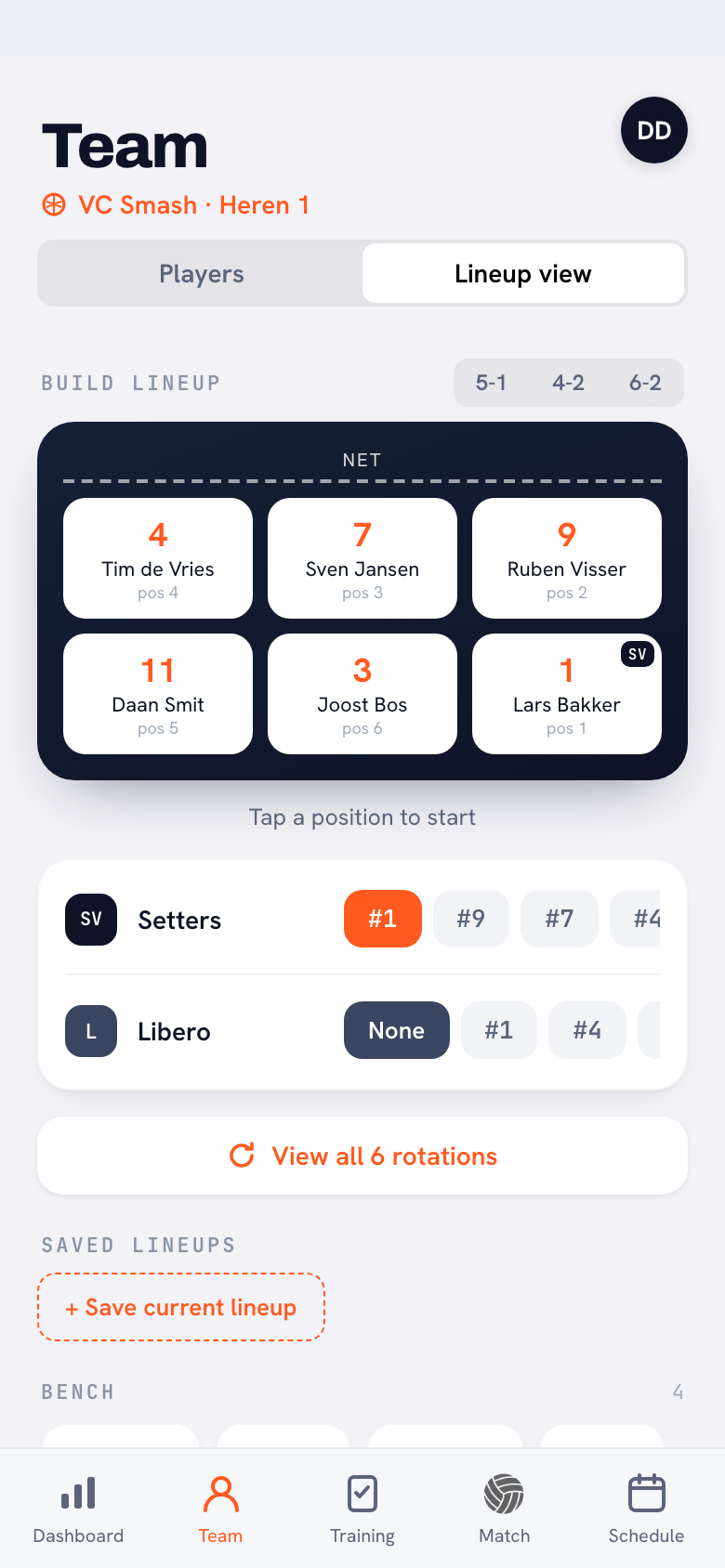
A strong attacker is not a constant threat — he is only in the front row for three rotations. Work out (from the previous meeting or the first set) in which rotation positions he is at the net, and with which starting rotation your best blocker faces him there as often as possible. That is ninety percent of the match-up, settled before the first serve.
Step 2: make blocking agreements per situation
- Where do we block him? Choose: close the line and leave the cross to the defense, or the other way around. Blocking half-and-half is blocking nothing.
- Who helps? Agree when the middle shifts out to the side — for example, always on a perfect pass by the opponent.
- What does the defense do? Behind the block there is a gap and a task: the open corner belongs to the libero, the tip to position 6. Block and defense are one system.
Step 3: accept his points — count his versus yours
You will not shut down a top attacker; you are going to squeeze his efficiency. Twenty points from forty balls is a won duel for you, twenty from twenty-five a lost one. Track it in the match statistics: if his error count and your block touches rise, the plan is working — even if he keeps scoring.
Serve at him. The cheapest blocking help is an attacker who has to pass first: his approach gets shorter and later. Putting a strong server on his position is block organisation by other means.
Frequently asked questions
Should I double-block their best attacker?
On a good pass by the opponent: yes, that agreement is worth it. On a bad pass, no — the chance of an emergency ball is high and you do not want to pull your block out of position.
What if my best blocker happens to be in the back row?
That is exactly why you choose the starting rotation in advance: you decide which positions coincide. For the remaining rotations the agreement plan applies — line or cross, and the defense fills in.
How do I train this in the week before the match?
One twenty-minute block: attacker on the relevant position, block plus defense in the agreed division of tasks, count the balls defended. See also the blocking drills for your middle blockers.
Try it yourself in Koach
Less admin, more coaching — starting at your next practice.
Get started with KoachOr read first what the volleyball coaching app does.