
The form indicator: the last three matches, weighed
The season average says who is good; form says who is good right now — these weeks, for Saturday's match. The form indicator condenses the last three matches into one arrow: rising, falling or stable.
Why three matches?
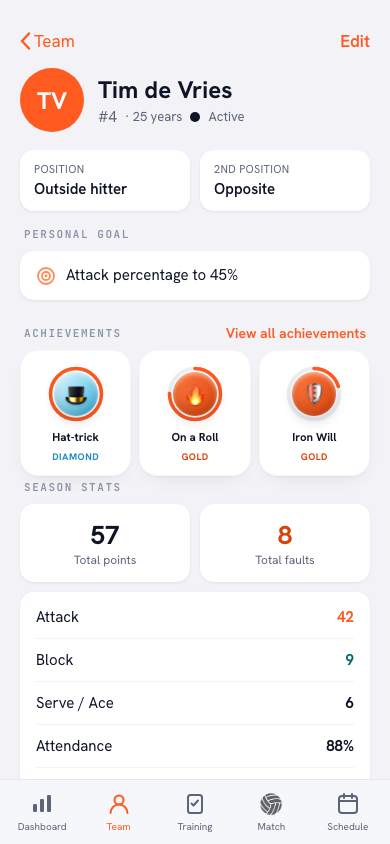
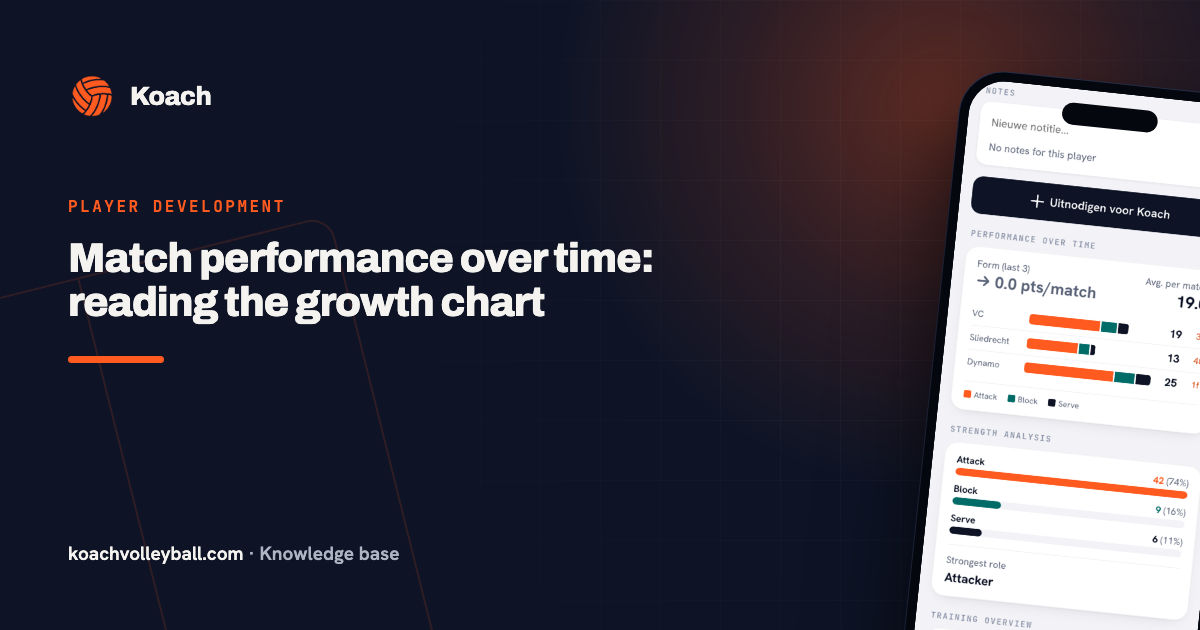
One match is noise — everyone has an outlier. Ten matches is history — that still includes the October slump. Three matches is the window where form becomes visible without luck taking over: long enough to be a pattern, short enough to stay current. In Koach the indicator sits on the growth tab: Form (last 3), set against the player's own season average.
Reading form: against the player's own standard
The crucial word is own: form measures a player against their own average, not against the top scorer. The bench player who climbs from 3 to 6 points per match is in red-hot form; the star who drops from 20 to 14 is in a slump — even though they still score the most. That relative view prevents the classic mistake: confusing form with level.
Responding without overreacting
- Rising form: give it room — more balls on the big points, a start for once. Rewarding form is the cheapest motivation there is.
- Falling form: look for context first (injury? practice attendance? something at home?), only then intervene. One conversation beats three tactical corrections.
- Stable: the least glamorous and the most valuable — the stable player is your foundation. Say that out loud once in a while.
Form is a conversation opener, not a verdict. "Your form is dipping — what do you see yourself?" opens something up; benching a player "on form" without a conversation closes something down. The indicator points; the coach decides.
Frequently asked questions
How does form relate to the season average?
The average is the standard, form is the deviation from it: is someone performing above, at or below their own level over the last three matches. Together they tell you level and currency.
Should form decide my lineup?
Factor it in, yes; let it dictate, no: form is three data points. Rule of thumb — when in doubt between two equally matched players, form wins; a class difference is not overruled by three lesser weeks.
What does falling form mean for a youth player?
Often growth in disguise: new technique or a new position costs points before it pays off. Check what has changed before you conclude 'loss of form' — the dip that comes with learning is a good dip.

Try it yourself in Koach
Less admin, more coaching — starting at your next practice.
Get started with Koach