
Tracking player development in volleyball: from gut feeling to insight
"I think he has really improved this season." Great — but in what, exactly? Coaches who track development on gut feeling alone mostly remember the last two matches. A few simple numbers make growth visible, for the player too.
Why you want to measure development (especially at amateur level)
At the top level, video analysts do this work. In grassroots volleyball the coach is the entire staff at once — and that is exactly where a little structure makes the biggest difference:
- Players stay motivated longer when they can see their own progress, even in a season where the team is losing.
- Evaluation talks become concrete. "Your attack grew from 35% to 44%" is a different conversation than "I think you're doing well".
- You train with more focus. If the numbers say serving is the weakest skill, you know what is on Tuesday's practice plan.
Start with a personal goal per player
Tracking development does not start with numbers but with an agreement: what is this player going to improve this season? Make the goal measurable and within their control. Not "attack better", but "attack percentage up to 45%". In Koach that goal sits on the Overview tab of the player page, right below the season — so every glance at the profile immediately asks the question: are we on track?
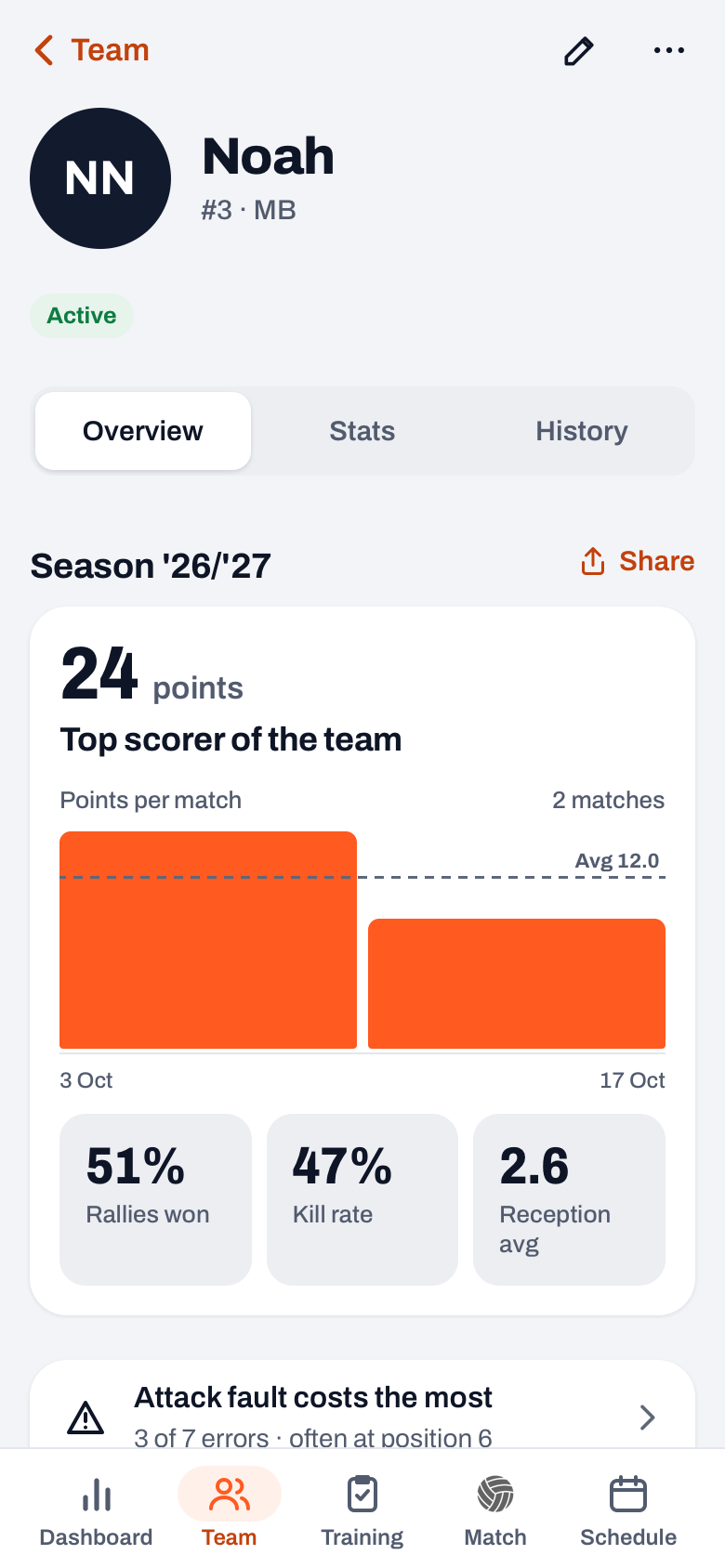
The statistics under Stats and History fill themselves in, as long as you track your matches live: total points, breakdown into attack, block and serve, error count and attendance. Small achievements — 25 points in one match, every match played — make growth fun on top of that.
Look at the line, not the dot
One match says little; three matches form a trend. Under Stats, Per match shows how many points a player made per match, or another measure you pick, such as plus/minus or rallies won. The form line on Overview summarises the last three matches: form is rising, dropping or steady compared to the average.
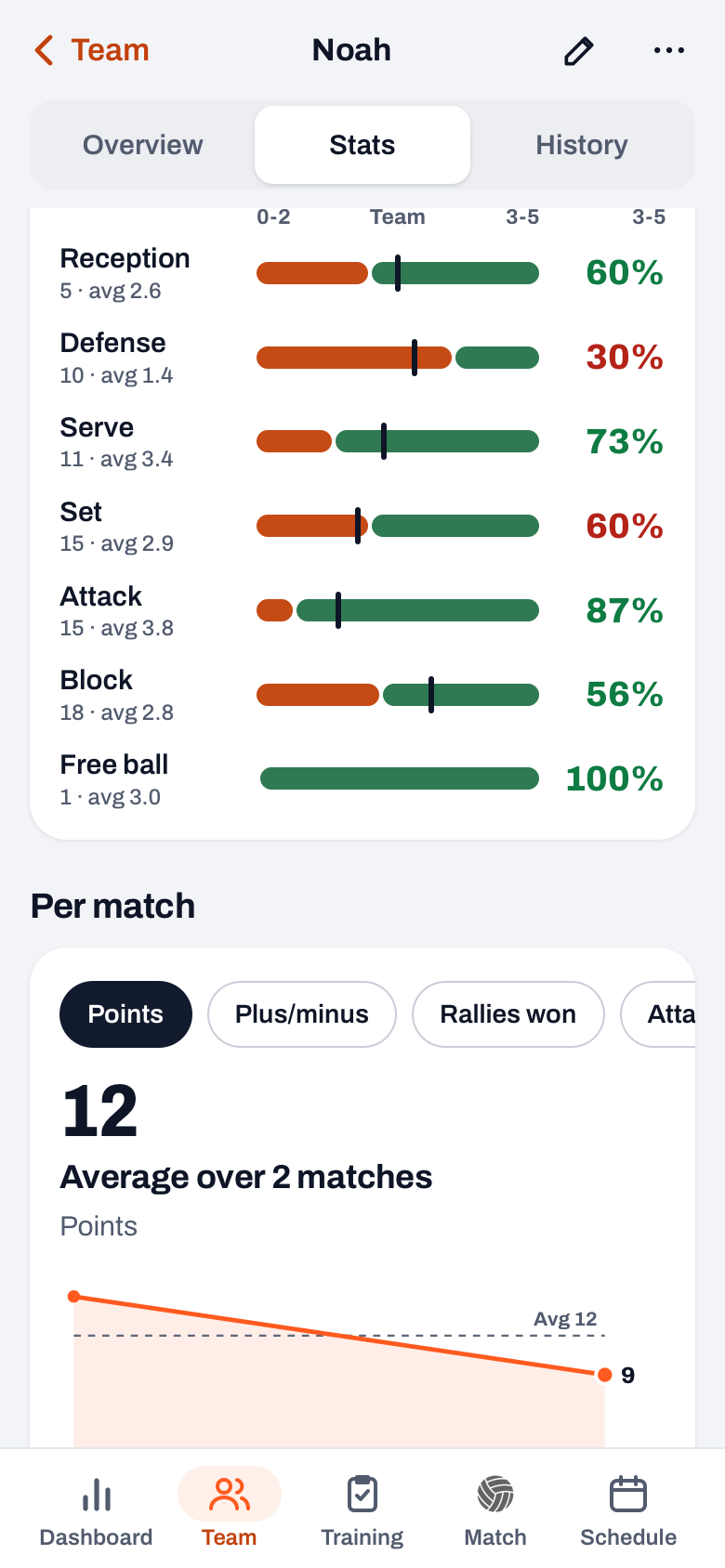
The strength analysis: where does the production come from?
The split between attack, block and serve tells you what kind of player is developing. An outside hitter with 74% of points from attack is in great form — but if the block stays stuck at 16% while opponents keep attacking higher, you know where the next practice blocks should go. Strongest role according to the data (under Stats, at Points): that is not a label, but a starting point for the conversation.
Do not forget practice: match numbers without practice context are misleading. A dip in form alongside 60% practice attendance is a different story than a dip with full commitment. So track attendance and effort per practice as well.
How to run the development talk
- Let the player look first. Open the player profile together and ask: what stands out to you?
- One strength, one development point. Nobody remembers more, and it keeps the tone balanced.
- Tie it to the personal goal. On track? Celebrate that. Off track? Adjust the plan, not immediately the goal.
- Compare the player with themselves, never out loud with a teammate. Growth is personal.
Frequently asked questions
Which statistics say the most about development?
The combination of production (points from attack, block and serve), error count, practice attendance and effort. One number on its own distorts; together they show whether someone is really growing.
How do I set a good personal goal?
Measurable and within the player's control: "attack percentage up to 45%" instead of "attack better". Tie it to something you actually track and review it every few weeks.
How do I keep numbers from demotivating players?
Use them as a mirror, not a report card. Discuss trends instead of single matches and show players their own growth instead of comparing them to teammates.


Try it yourself in Koach
Less admin, more coaching.
Get started with KoachOr read first what the volleyball coaching app does.