
Match performance over time: reading the growth chart
Every match is a snapshot; only laid end to end do the images become a film. The growth chart — performance per match across the season — is that film. You just have to know how to read it.
What the chart shows
On every player's profile you find their match performance over time in two places. Overview shows Points per match (from attack, block and serve) as bars, with the average as a line. Under Stats, Per match shows a line with one point per match, and there you pick the measure yourself: points, plus/minus, rallies won, attack efficiency, the 0-5 ratings or errors. Together with the average and the form line, this forms the timeline of a season — built automatically from every recorded match.
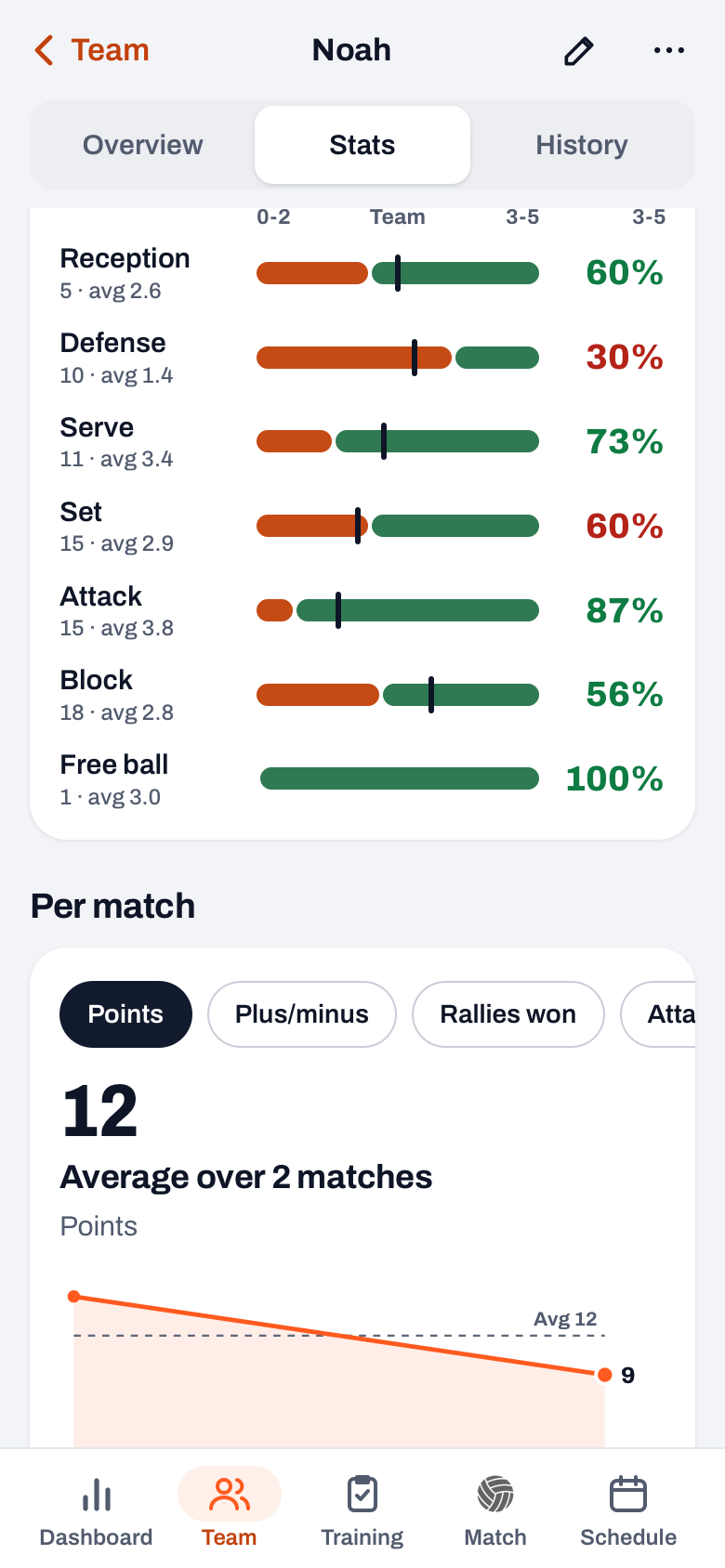
The three reading patterns
- The direction of the line: squint at it — is it rising, falling or waving? The direction over ten matches is more reliable than any single data point, and the piece of evidence in an evaluation talk.
- The composition: a flat total can hide a shifting story — less attack, more block means a different player is emerging. Switch the measure under Per match, or look at the split under Stats at Points: they tell what the total conceals.
- The outliers: tie peaks and dips to context — who was the opponent, were they in their own position, what do your notes say? A dip against the league leader is not a dip.
The classic reading mistakes
- Reacting to one bar: a coach who intervenes after every lesser match is coaching noise. Three matches is the minimum for a signal.
- Confusing volume with form: fewer points in matches with fewer sets is not a dip — look per set when playing time varies.
- Forgetting the context: the chart does not know the player had the flu. Your notes alongside it complete the film.
Let the player read their own chart. "What stands out to you?" is the most powerful question in any progress conversation — players often see exactly what you wanted to tell them in their own line, and then they believe it.
Frequently asked questions
How many matches should the chart cover for a fair picture?
From about five matches the direction becomes readable; half a season makes it reliable. Be cautious with conclusions in the first month — the chart needs to eat data first.
My player swings wildly: great match, off day, great match. What does that mean?
Inconsistency is the pattern — often mental or opponent-dependent. Find the common denominator of the good days (at home? after a good week of practice?) and you have a lead to work with.
Can I lay players' charts side by side?
For yourself as a coach: fine, for a lineup decision for example. In front of players: do not — compare everyone only with their own line, or the instrument becomes a weapon.
Try it yourself in Koach
Less admin, more coaching — starting at your next practice.
Get started with KoachOr read first what the volleyball coaching app does.