
Balancing school and sports: volleyball around tests and exams
The short answer
Balancing school and sports works best when the planning is settled in advance: put the test and exam weeks in the team schedule at the start of the school year, agree that missing practice for a test is fine without guilt, and make those weeks lighter instead of canceling them. The coach adjusts practice, the player lets you know in time.
Balancing school and sports gets harder between 14 and 18: more homework, test weeks and exams, while volleyball is getting more serious at the same time. This article is for the coach and the parent who want to set up the season around that: what to agree at the start of the school year, what to adjust in a test week and how a player can cancel without feeling guilty.
Why school and sports clash between 14 and 18
Up to about fourteen, school and volleyball usually go together without much effort. After that, something changes on both sides. At school come test weeks, projects with a deadline and eventually final exams. In volleyball come more practices, longer travel times and matches that matter. On top of that there is often a part-time job and a social life.
The good news: the clash is not equally big all year. It peaks in a few weeks a year. If you know those peaks in advance, you can plan around them. When they fall differs by country, by school and even by class. So it is not a date you can look up, but a question you ask at the start of the season.
Quitting sports to make time for school seems logical, but it is rarely necessary. The WHO guidelines on physical activity mention, for children and adolescents aged 5 to 17, besides physical benefits also better cognitive outcomes, such as academic performance and executive function, and fewer symptoms of depression (Bull and colleagues, 2020). So the question is not whether a player keeps playing sports, but what the weeks around tests look like. What short nights in a test week do to recovery is covered in sleep and sports.
Three agreements at the start of the year that help all season
- The calendar. In the first practices, ask which test and exam weeks there are and put them in the team schedule, next to the practices and matches. Also ask who has final exams this year and who has a part-time job on practice nights. That way you see early on which weeks will get tight.
- The rule for canceling. Agree out loud: "A test comes before practice. Whoever cancels for school does so in time, adds the reason and does not have to apologize." For matches you ask for more notice, because the team needs enough players. Explain why, and it will not feel like a punishment rule.
- Who arranges it. From about fourteen, the player cancels, not the parent. That teaches responsibility and saves you messages through three channels. Parents stay informed, but do not have to take it over.
If someone has final exams, make a separate agreement for those months: for example one practice a week instead of two, or only the matches. What matters is that the player keeps belonging to the team, even if they come less often.
Canceling for a test without guilt
Many teenagers find canceling hard. One comes anyway, tired and with their head on the test. Another says nothing and stays away. A third skips studying so as not to let the team down. None of the three is what you want. You make canceling normal by saying it at the first practice: "School comes first. I will not hold it against anyone who cancels for a test."
Be honest about playing time too. If on your team the players who practice most get the most playing time, say in advance how test weeks count. A player who suddenly sits on the bench after a test week without knowing that beforehand feels punished for their schoolwork. A rule everyone knows prevents that conversation.
Do watch for the opposite. A player who cites school as the reason all season, outside test weeks too, may be dealing with something else: less fun, another sport or the idea of quitting. Ask about it calmly, away from the group. How to keep such a group together is in keeping youth players.
Ask the question at the first practice. Ask: 'Who has exams this year, and when are your test weeks?' Write the answers down straight away and put them in the schedule the same week. That takes five minutes and saves you a lot of puzzling later in the season.
What the coach adjusts in a test week
A test week is not a week to cancel practice. For many players, practice is a welcome break from studying at exactly that time. Make the week lighter, not emptier:
| Period | What you plan | What you leave out |
|---|---|---|
| Normal week | Full practice, new material, tactics | Nothing special |
| Test week | Technique and games, shorter or lighter, with fun | Fitness test, tryouts, a new system |
| Exam period | Optional practice or a break, staying in touch | Mandatory attendance |
| The week after | Building up gently and repeating what was there | Catching up on everything in one practice |
A few choices make the difference. Plan a new system or a tryout in a week when everyone is there, not in a week when half the team is missing. Keep friendly matches and tournaments outside test weeks as much as possible; league matches are usually fixed. If too few players come, practice together with another team, or turn it into an open practice for whoever can make it. How to tell whether a team is overloaded by the sum of everything is in recognizing overtraining.
And the week after the tests: do not expect top form. A player who slept little and sat a lot for a week needs a practice to get back into it.
Agreements with parents
Parents play a different role than with young children. They usually no longer cancel themselves, but they do see how busy their child is. At the start of the season, tell them in a message or at a parents' meeting what you do: test weeks in the schedule, lighter practices in those weeks, and canceling is allowed without discussion. Only ask them to let you know if their child is structurally too busy.
Sometimes a parent decides to ban volleyball for a while because the grades are disappointing. That is their decision. What you can do is let them know there are middle ways: one practice instead of two, or a few weeks of only the matches. That way the player stays with the team, and parent and player see that volleyball is not an all-or-nothing choice. How to make agreements with a team of teenagers instead of imposing rules is in coaching teenagers. What changes in practice itself per age is covered in coaching youth volleyball by age.
Tracking test weeks and absences in Koach
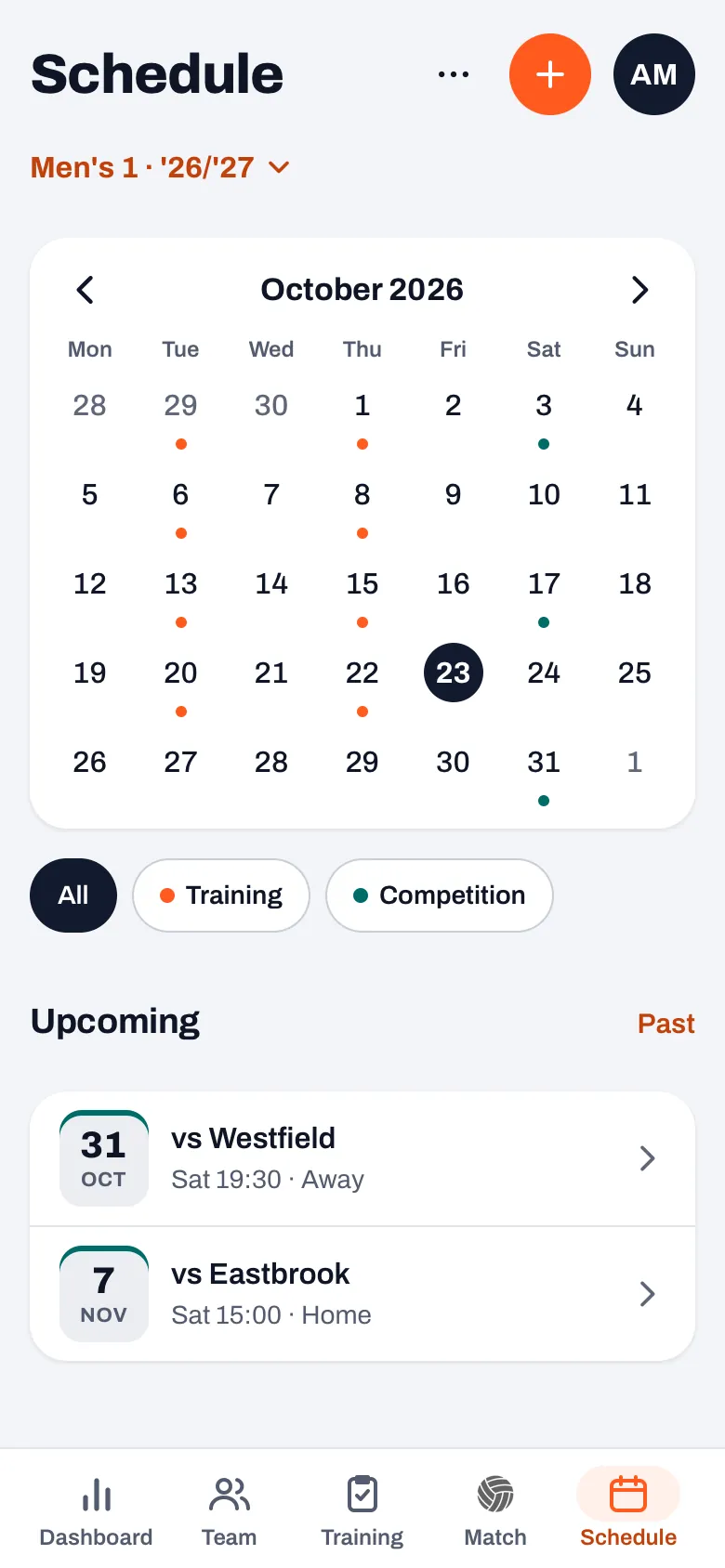
In Koach you add a test week as a separate event in the schedule: the plus button opens New event and you choose Other. Such an event has one date. So put it on the first day of the test week and write in the title when it ends, for example "Test week through Friday". Leave Visible to set to Whole team. That way it sits between the practices and matches for players and parents, and while planning you see which weeks get tight.
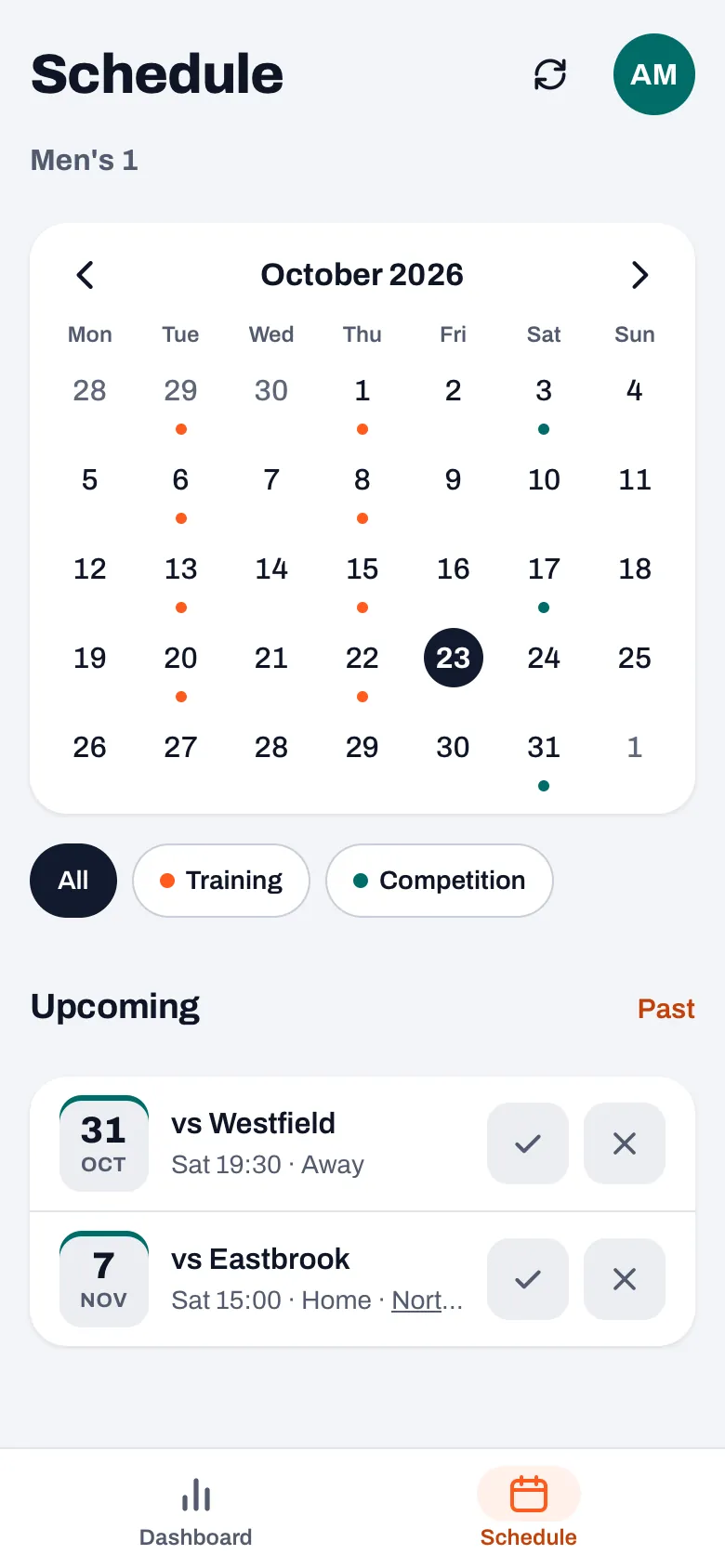
A player with their own account cancels for a practice with Can't make it and then picks a reason, such as School, with an optional comment. That reason is only for coaches; teammates do not see it. You see the reason in the attendance list for that practice, so you do not have to ask why someone is missing. Parents can also cancel for their child with a reason. If you want to let the team know that practice in a test week is lighter, post it as an announcement on the dashboard.
14 days free, no credit card. Put your team's test weeks in the schedule tonight and see at a glance which weeks need to be lighter.
Plan your season in KoachWhat Koach costs after the 14 free days is on the pricing page.
Frequently asked questions
How do you balance school and sports during exams?
Make one agreement for the whole period instead of week by week. A common choice is practicing less, for example once a week instead of twice, or only playing the matches. Agree that the player keeps belonging to the team and stays in touch. Put the exams in the team schedule early, so the coach can take them into account for the lineup and the planning.
Can you skip volleyball practice because of a test?
On most teams you can, and a good coach agrees on that in advance. Let the coach know in time, add the reason and you do not need to apologize. For a match, a coach usually asks for more notice, because the team needs enough players. If you are unsure, ask at the start of the season how it works on your team.
Is quitting sports good for your grades?
Not automatically. The WHO guidelines on physical activity (2020) mention better academic performance and executive function as one of the benefits of enough physical activity for children and adolescents. Quitting frees up time, but also means less relaxation and less contact with friends. A lighter period often works better: practicing less during test weeks, instead of stopping altogether.
What does a coach do when half the team cancels in a test week?
Practice goes ahead, in a different form. Plan technique and games that work with fewer players, practice together with another team, or turn it into an open practice. Save new tactics, a fitness test or tryouts for a week when everyone is there.



Put the test weeks in your team schedule
14 days free, no credit card. At the start of the year you already see which weeks need to be lighter.
Get started with KoachOr read first what the volleyball coaching app does.