
Players on two positions: flexible lineups
Every coach knows the Saturday when it works on paper and rattles in the hall: the opposite sick, the middle off skiing. Flexible lineups are not improvisation — they are prepared mobility.
Flexibility starts with the admin
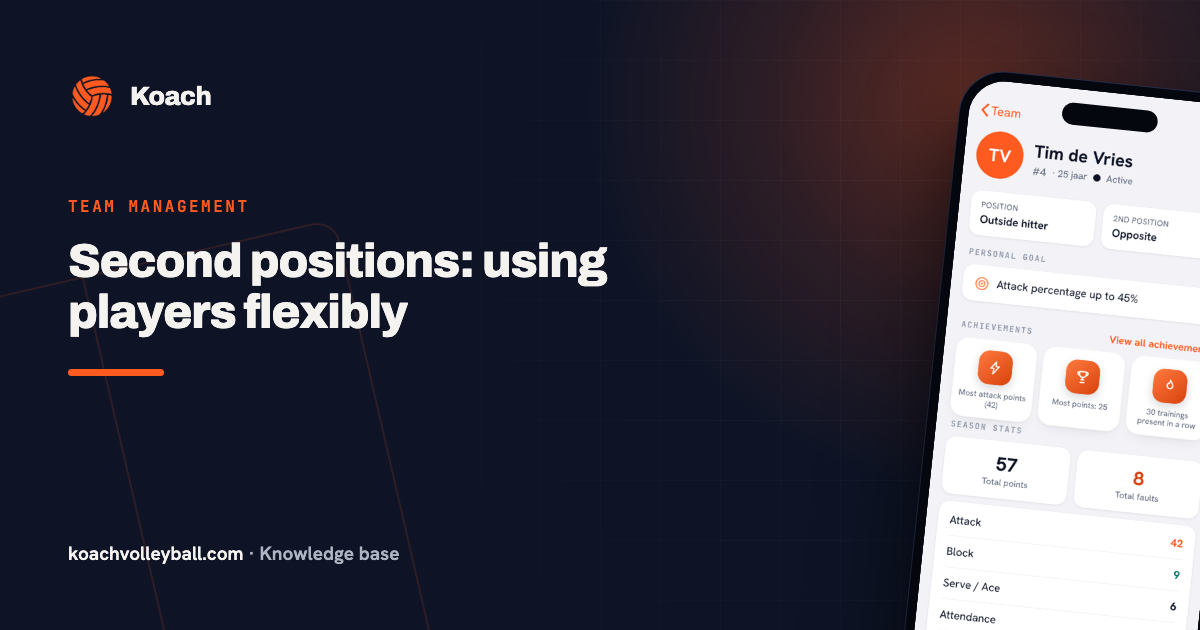
You can only shift if you know who can shift. Record a second position per player in the profile; when building the lineup you then see your alternatives immediately instead of having to poll the team. Rule of thumb from building your roster: at least three players in your squad with a genuine dual role.
The three shifting scenarios
- Absence (forced): the dual role replaces one-for-one. Outside hitter shifts to opposite, done. Do not also change your system — one change at a time.
- Off day (corrective): your opposite hits everything into the block. Do not substitute immediately: shift the tasks (more attack through the outside, opposite focuses on block and serve) and give him two rotations to come back.
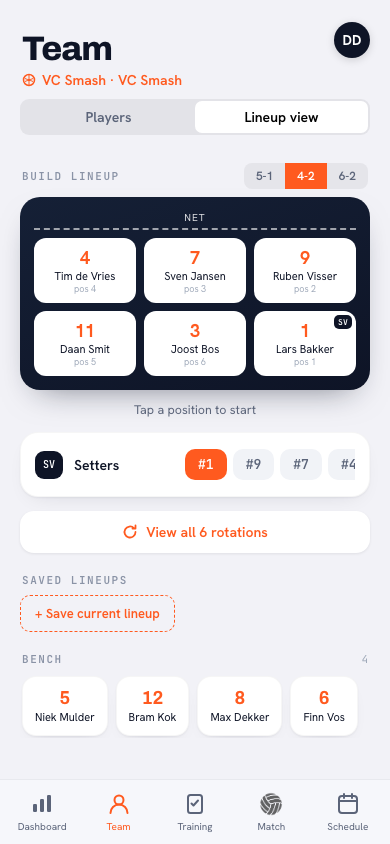
- Tactics (offensive): against a small block an extra attacker pays off; in a 4-2 you can even let your back-row setter threaten as a second opposite — see the 4-2 in detail.
The limit of flexibility
Every shift costs something: automatisms, running routes, blocking agreements. Rule of thumb: at most two players on their second position at the same time, and never replace your setter and your libero at once. A team that has to rethink three positions is no longer playing a system but a makeshift formation.
Train the shifting scenario before you need it. One game form per month with the 'emergency lineup' turns your plan B into a real option instead of a paper reassurance.
Frequently asked questions
How often may I change my lineup within a match?
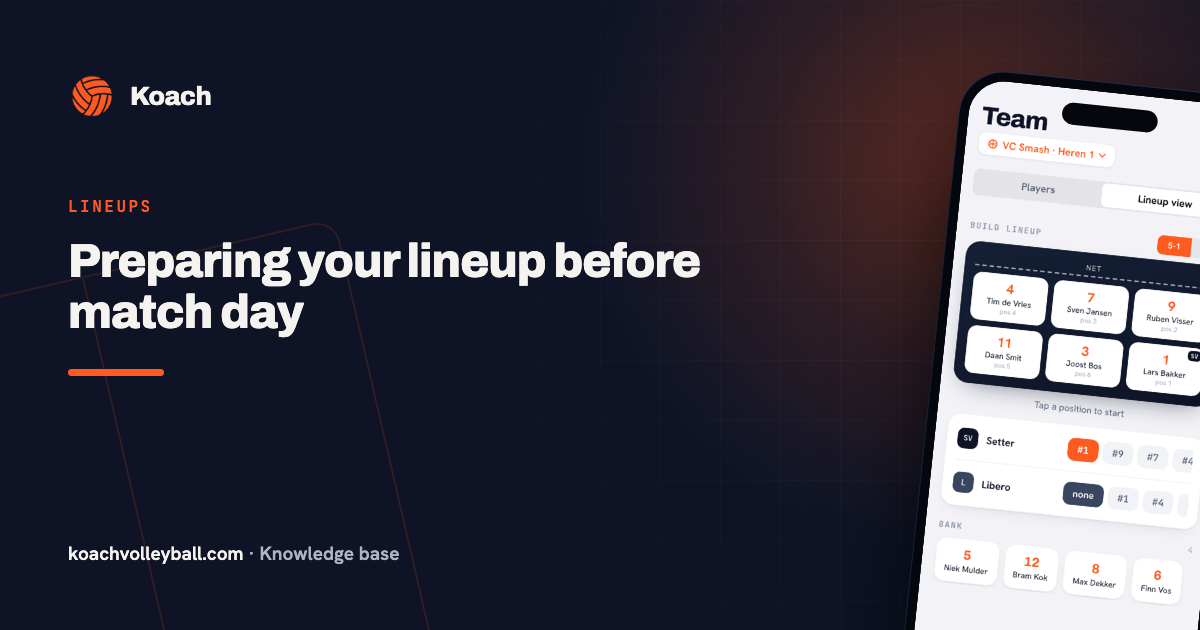
You submit a new starting lineup per set — so between sets you can shift freely. Within a set it can only happen through substitutions, with the pair rule as the limit.
Does flexible lineup building hurt player development?
The other way around: players who know multiple roles read the game better. Do guard the balance — three quarters of the playing time on the main position keeps the specialisation on track.
What if a player does not want to play their second position?
Discuss it away from match day: there is usually insecurity behind it, not unwillingness. A few targeted practice sessions and a clear, temporary role description remove most of the resistance.

Try it yourself in Koach
Less admin, more coaching — starting at your next practice.
Get started with KoachOr read first what the volleyball coaching app does.