
Serving runs: points in a row on your own serve
The cheapest points in volleyball come from the service line: the same player keeps serving, the opponent never gets into their build-up, and the run grows. Everyone in the hall knows thát Sanne was serving well for a while — nobody remembers afterwards for how long. Koach now keeps track: live, in the match report and all the way into the trophy cabinet.
What is a serving run?
As long as your team wins the rally, the same player keeps serving — and every rally won in that turn is a point in a row on their own serve. From three points on we call it a run: the moment a serving turn changes from bookkeeping into pressure. Runs are almost always the explanation for a set that turned, and they are the most honest evidence of serve pressure — even when there is not a single ace among them.
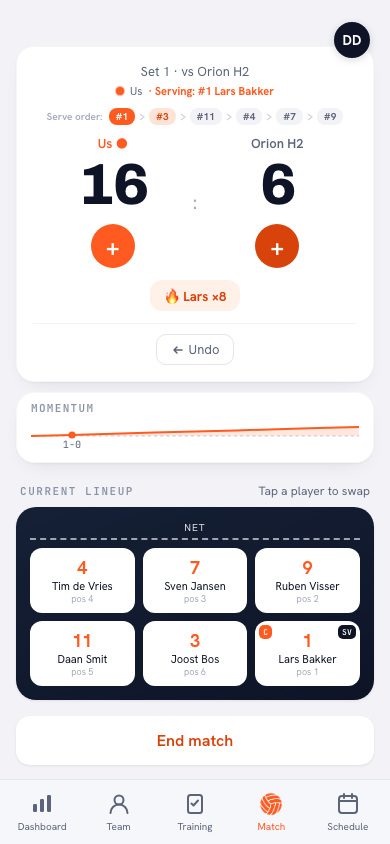
Live: the 🔥 chip
When a player scores three or more points in a row on their own serve during live scoring, a 🔥 chip appears next to the score with the length of the run. For you as a coach that is two signals in one: you see immediately whó is producing pressure, and the bench sees it too — a burning chip does more for your server's confidence than three shouts of encouragement. Is the run happening on the opponent's side? Then the chip is your quiet reminder of the oldest rule of thumb: time-out at three in a row.
Afterwards: the top 3 longest serving turns
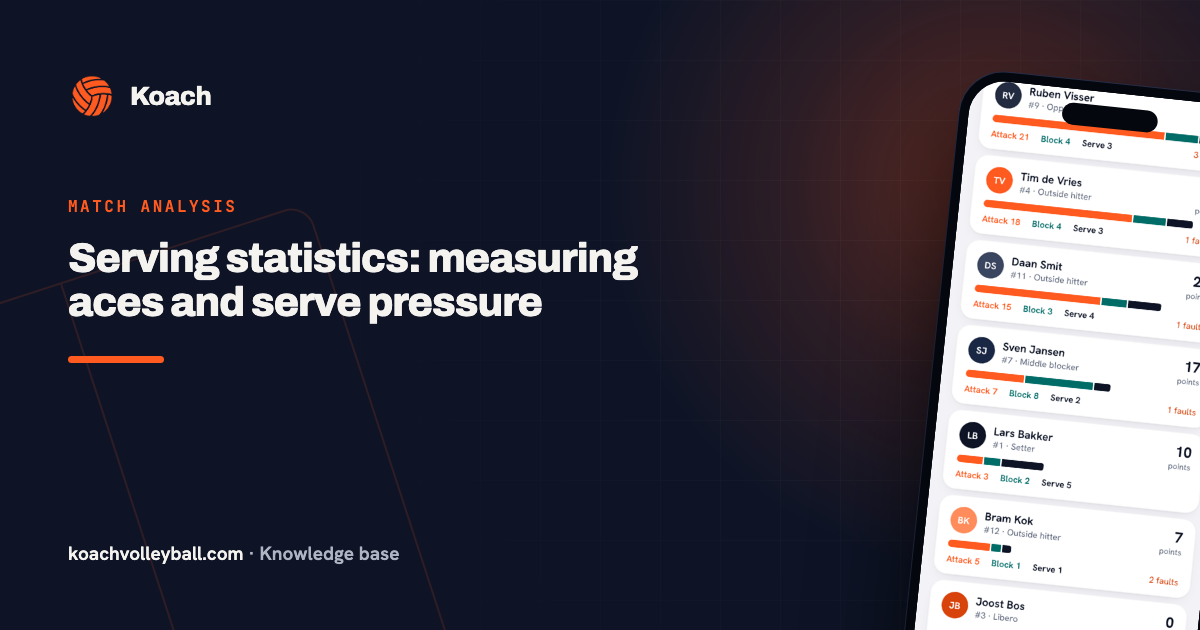
After the match, the match detail shows a top 3 of the longest serving turns, set included. That is exactly the information that stays invisible in the regular serving statistics: aces count the direct yield, runs show the pressure without an ace. Whoever produced a run of five in both set one and set four is a serious candidate to serve early in the rotation — and the player who never shows up in the top 3 knows where training gains lie with targeted serving drills.
The Serve Cannon badge
Serving runs also count towards the achievements: the Serve Cannon badge rewards a player's longest serving turn. Bronze from four points in a row, silver from seven, gold from ten. That turns serve pressure into something to work towards — and gives the player who rarely makes the top scorer list a milestone that can only be earned from the service line.
Use the top 3 for your serving order. The player who structurally produces runs is one you want early in the rotation: more serving turns per set is the cheapest tactical gain there is. One look at the top 3 of the last three matches and your order writes itself.
Frequently asked questions
When does the fire chip appear during live scoring?
As soon as a player scores three or more points in a row on their own serve. The chip grows with the run and disappears once the serve passes to the opponent.
Do only aces count towards a serving run?
No — every rally your team wins while the same player is serving counts: aces, attack points after a disrupted pass and opponent errors. That is exactly why the run is a better measure of serve pressure than the ace counter alone.
How does a player earn the Serve Cannon badge?
With their longest serving turn in one run: bronze from four points in a row, silver from seven, gold from ten. The badge updates automatically for matches scored live.

Turn serve pressure into a number
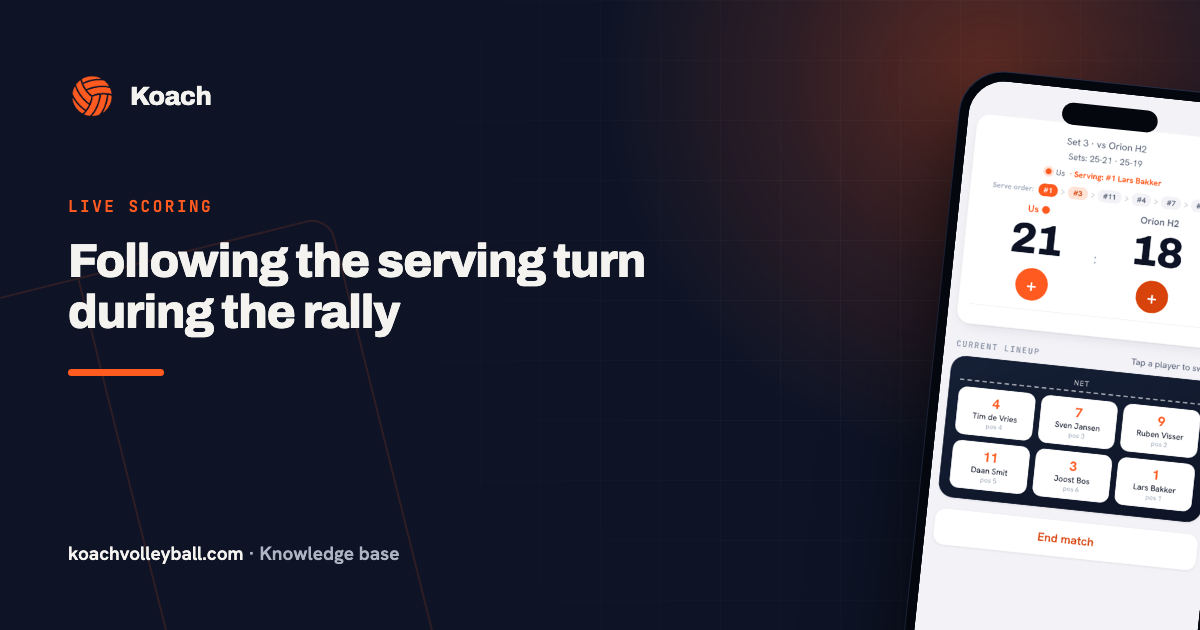
Score your match live in Koach and every serving turn counts — from 🔥 chip to Serve Cannon.
Get started with KoachOr read first what the volleyball coaching app does.