
The 4-2 system in detail: when and how
The 4-2 is often dismissed as a 'beginner system' — unfairly. For teams without a standout first setter it is the smartest choice there is: simple in rotation, stable in the chaos.
How it works: always a setter in the front row
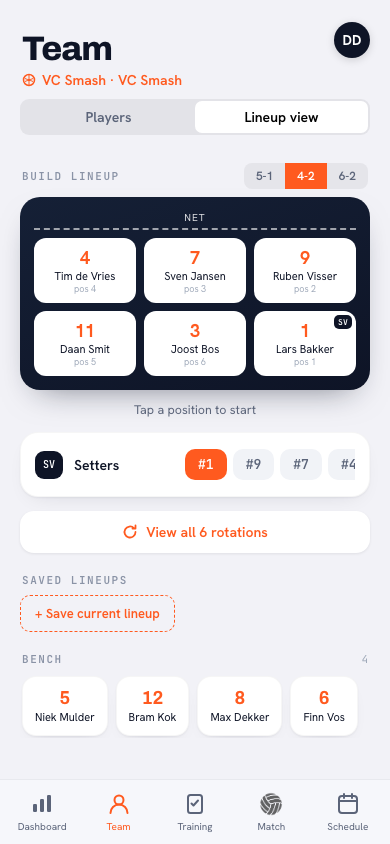
In a 4-2, two setters stand diametrically opposite each other in the lineup. Whichever of the two is in the front row sets; the other rotates through the back row as an attacker or defender. The set therefore always comes from a position close to the net — no long penetration run, no hole in the defense, no panic on a mediocre pass.
Who is the 4-2 for?
- Teams learning to rotate: the simplicity lets players play instead of thinking about running routes.
- Teams with two setters of equal ability — or without one true setter: you spread the pressure and the learning opportunities.
- Teams with an inconsistent pass: a set from close range forgives more than a penetrating setter five meters off the net.
The price is attacking power: in the front row you always have only two genuine attackers next to the setter. Against an organised block you will feel it — the moment to start thinking about the switch to a 5-1.
Setting it up and playing it
In the lineup, choose 4-2 and assign your regular setter; place the second setter directly opposite them on the court. Tactical tip for the court: let the back-row setter rotate through as a defender with attacking threat on the right — that keeps the opponent's block honest.
Make the switch to a 5-1 in pre-season, never mid-competition. The difference in running routes and responsibilities is bigger than it looks; give the team six to eight practices before points are at stake.
Frequently asked questions
What is the difference between a 4-2 and a 6-2?
In a 6-2 the setters only set when they are in the back row (they penetrate), so you always have three net attackers. That is physically and tactically more demanding — the 4-2 is the simple variant, the 6-2 the ambitious one.
Can my two setters differ in level?
Yes, but compensate in the lineup: place your strongest attackers in the rotation positions of your weaker setter. And give both setters the same conventions, so attackers do not have to switch gears.
Is a libero useful in a 4-2?
Absolutely: the libero replaces the middle blockers in the back row here too. Precisely in a 4-2, where the organisation breathes simplicity, a stable pass from the libero is a free upgrade.



Try it yourself in Koach
Less admin, more coaching — starting at your next practice.
Get started with Koach