
Tracking opponent errors separately
An opponent's service error is a point on the board — but whose point? Nobody's, and that is exactly how you should record it. The separate error button is the difference between honest numbers and flattered ones.
The problem with gift points
In an average amateur match, easily a quarter to a third of your points come from errors on the other side: serves into the net, attacks out, foot faults. If you silently book those to whichever player 'was up', you inflate his numbers and lose sight of what your team actually creates. Scoring twenty points is not the same as receiving twenty points.
One button, two separate worlds
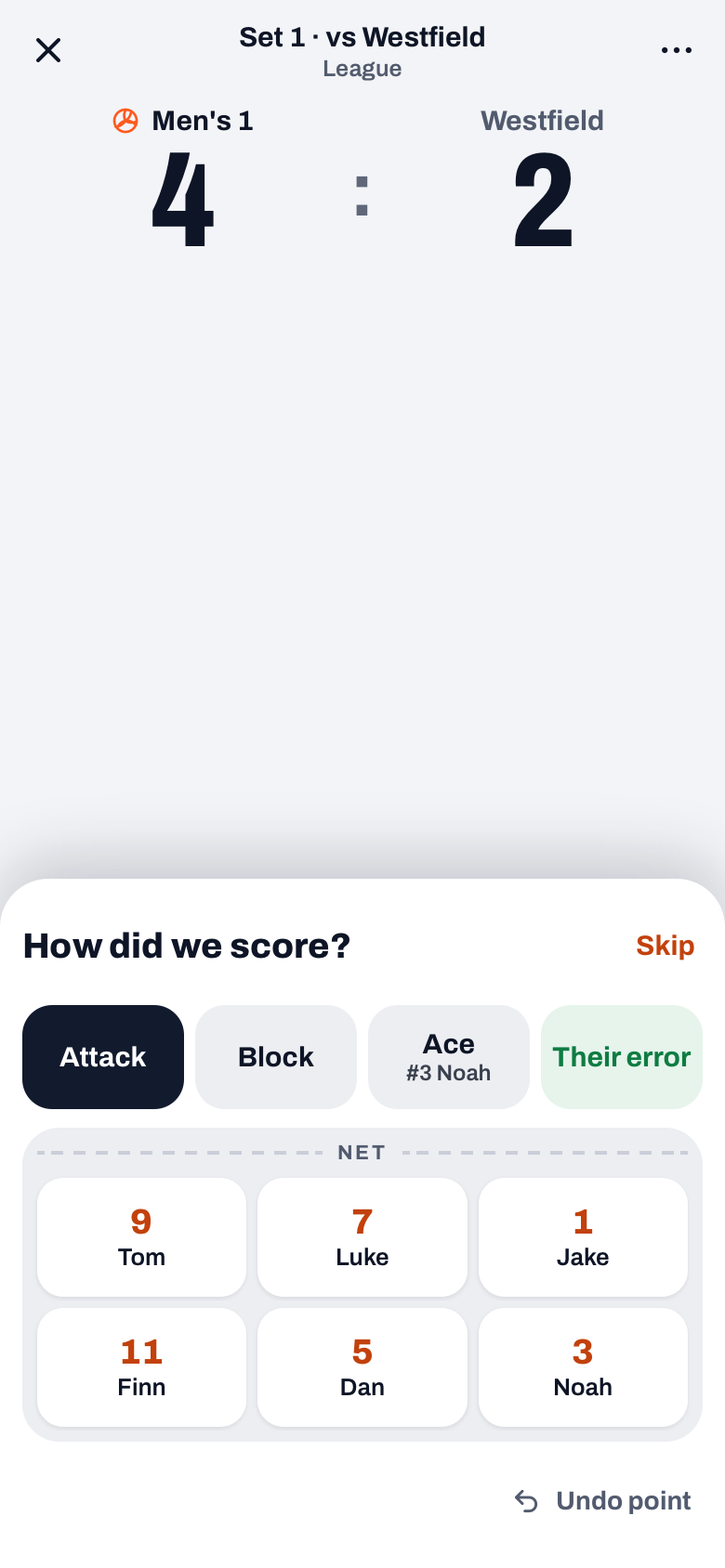
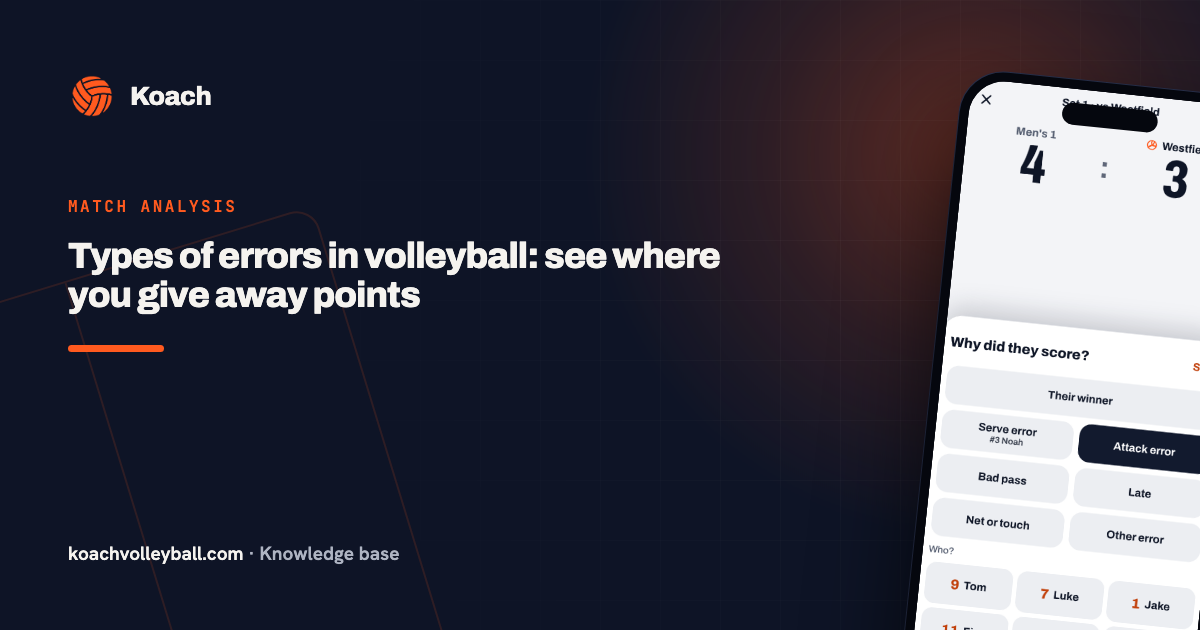
After every point for your team, Koach slides up the How did we score? drawer. Next to Attack, Block and Ace sits one button that looks different: Their error. It completes the point straight away and books it on the score, but to nobody personally. That creates two clean series: what you forced (attack, block, serve per player) and what you were given. Both count towards the win, but only the first says anything about your own level. It works the same the other way round: when the opponent scores, the Why did they score? drawer lets you choose between Their winner and an error of your own (see types of errors in volleyball).
What the error ratio tells you
After a few matches, the ratio itself becomes a statistic. Did you win with 40% gift points? Then you mainly beat a sloppy opponent — be careful drawing conclusions about your own form. Do you lose while the opponent barely made errors? Then the gap in level was real. In the debrief this distinction is gold: 'they gave us set one, we took set three' is an analysis players understand.
Keep your own errors in mind too. The app counts errors per player in the statistics. In the debrief, look at both sides of the ledger: points scored and points given away together tell the real story.
Frequently asked questions
Does the error button not spoil the feeling of 'we scored 25 points'?
The team score simply stays 25 — only the individual columns count more strictly. You get used to it quickly, and it makes compliments more valuable: whoever has 15 next to his name really earned them.
Should I track which kind of error the opponent made?
Not for amateur use — that detail slows down input more than it pays back. The ratio of own points versus gift points is the insight; the type of error on the other side does not change your training.
How do I use this in the debrief without turning negative?
Flip it around: emphasise the share of forced points ('60% scored ourselves — that is where our growth is'). The opponent's error column is context, not a reproach to anyone.

Try it yourself in Koach
Less admin, more coaching — starting at your next practice.
Get started with KoachOr read first what the volleyball coaching app does.