
Preparing the match debrief with data
The worst debriefs last the longest: forty minutes of opinions about a match everyone saw differently. Data solves that — not because numbers know everything, but because they give the conversation a shared reality.
The preparation: pick three numbers
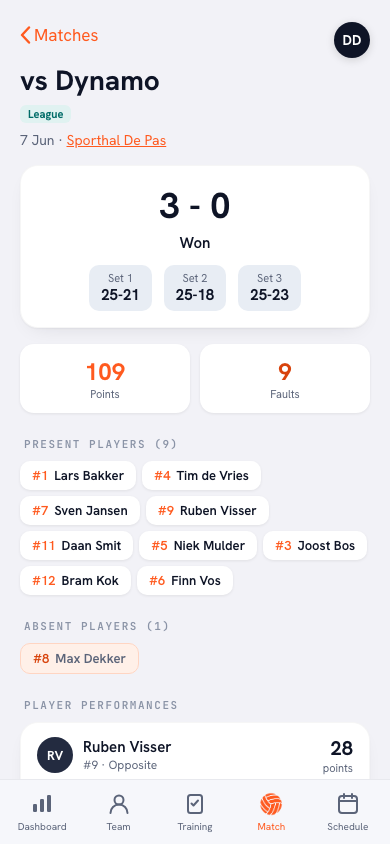
Open the match report and pick exactly three things from it — nobody remembers more:
- One team number that tells the story: the ratio of earned points to gift points, or the progression of the set that turned.
- One compliment with evidence: a player or unit that executed the plan — "eight block points, exactly what we trained for".
- One learning point that's trainable: no character judgment but a pattern with a solution — this becomes your focus for Tuesday.
The ten-minute structure
Minutes 1–2: the result, short and honest — no understatement after a win, no drama after a loss. Minutes 3–6: your three numbers, with the story attached and room for one question ("do you recognize this?"). Minutes 7–9: the translation to practice and the next opponent. Minute 10: end with the compliment — people remember the ending.
The pitfalls
- The tribunal: discussing individual error columns in front of the group. Individual numbers belong in the one-on-one conversation.
- The number avalanche: reading out the whole report. You did the reading; they get the conclusion.
- The fresh-emotion trap: dissecting a lost five-setter in the locker room. Keep it to the short version there; the real debrief follows at practice, when the numbers and the heads have cooled down.
Let the team guess first. 'How many of our points do you think we earned ourselves?' Whoever guesses first and then hears the real number remembers it three times better — and the gap between feeling and fact often is the lesson.
Frequently asked questions
Debrief right after the match or later?
Both, in different doses: three sentences in the locker room (result, compliment, look ahead), the real ten-minute debrief at the start of the next practice.
Should I discuss data after wins too?
Especially then — winning masks patterns that will hurt you against the next strong opponent. And one critical number after a victory is accepted far more easily than five after a defeat.
What if the numbers and the team's feeling clash?
That's not a problem but the most interesting moment of the conversation: 'it felt like a bad serving night, but we only missed three serves'. Explore together where the feeling came from — that's often where the real lesson sits.



Try it yourself in Koach
Less admin, more coaching — starting at your next practice.
Get started with KoachOr read first what the volleyball coaching app does.