
Running a season evaluation with data
Most seasons end with a barbecue and a 'better luck next year'. Fine tradition — but between the final match and the barbecue belongs one session that turns the season into lessons. With data, or the anecdote wins.
The preparation: facts before opinions
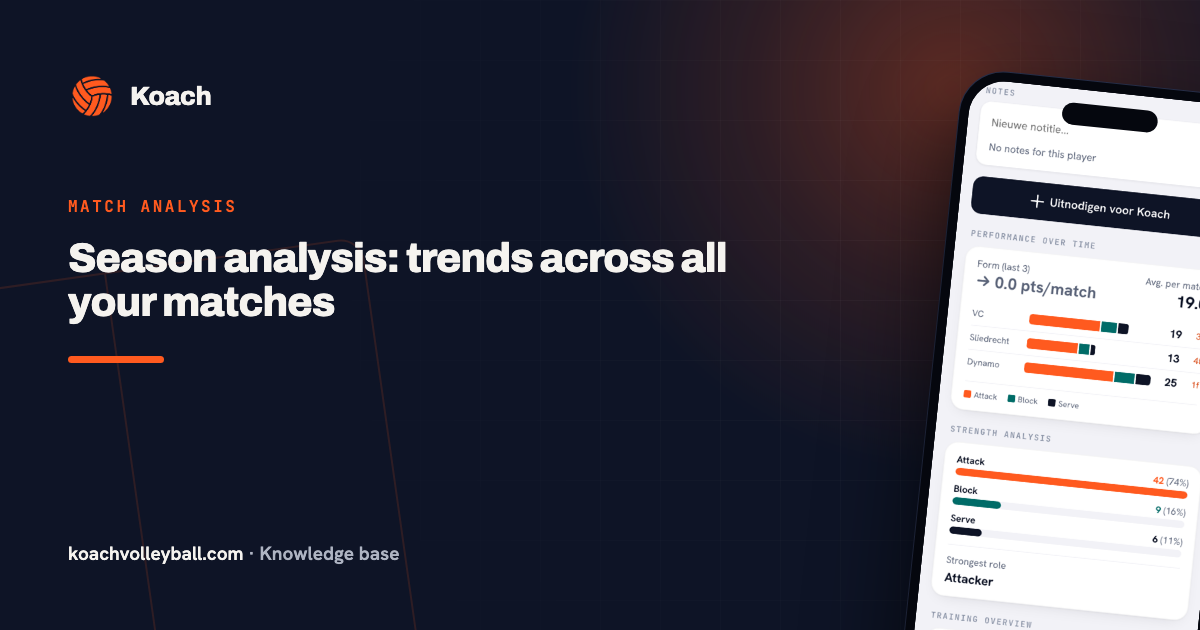
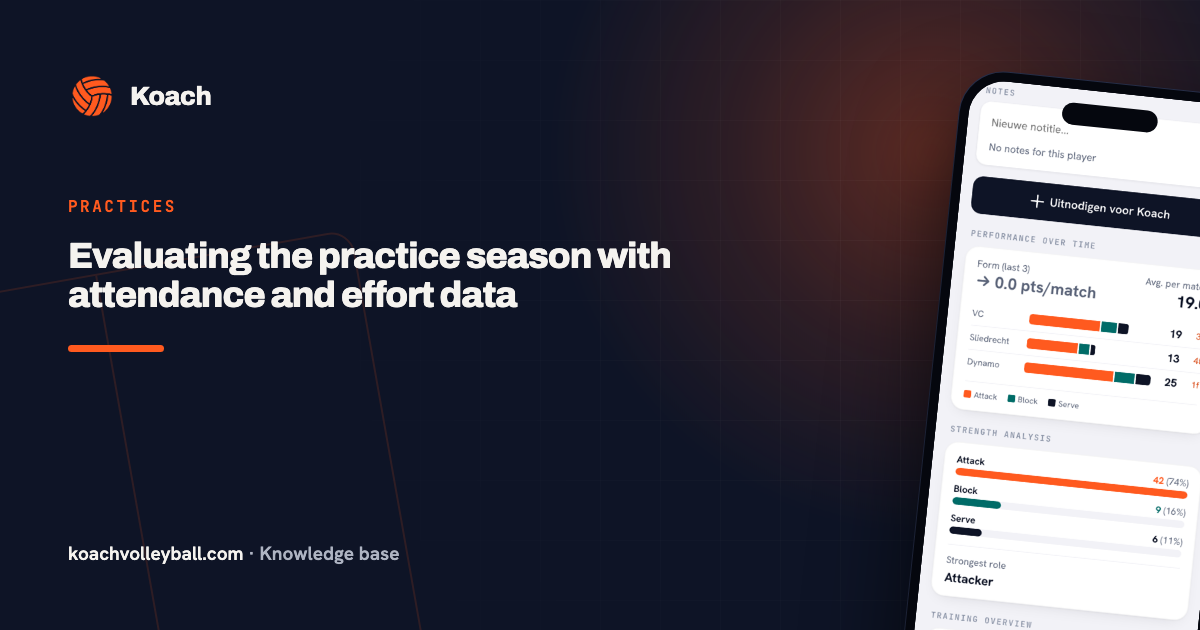
Don't come empty-handed: prepare the season analysis (the trends in three sentences) and the practice-season review (attendance and effort over time) in advance. Pick five facts from them for the team session — two to celebrate, two to learn from, one surprise that opens the conversation ("did you know we were the best team in the group after the winter break?").
The team session (60 minutes)
- Back to September (10 min): bring out the team goal and the agreements from the opening meeting — what did we agree, what did it become?
- The five facts (20 min): your data, their interpretation. Let the team explain what the numbers show; the best insights come from the locker room.
- The round that works (20 min): one answer per player to two questions — "what should we keep?" and "what needs to change?" Write everything down, decide nothing on the spot.
- The wrap-up (10 min): name three provisional lessons and sketch the process: the one-on-ones, the analysis, the plan for next season.
What does not belong in the team session
Individual assessments — those belong in the one-on-one reviews you hold in the same weeks. And decisions about team composition: the evaluation gathers input, the decisions follow later and well-founded (see promotion recommendations). An evaluation that ends in who-gets-cut discussions poisons the barbecue and the start of next season.
Timing is everything: within two weeks of the final match. Earlier is too raw after a disappointment, later everyone is mentally on holiday. And attach the date of the opening meeting to it — evaluation and fresh start are one cycle.
Frequently asked questions
Should the evaluation be different after a dramatic season?
The structure stays, the tone shifts: start with what did work (there always is something — the data will find it) and treat the disappointment as learning material, not a blame question. It's precisely after a bad season that the factual basis is your friend.
Evaluate in writing or in person?
Combine them: a short form beforehand (three open questions) gives the quieter players a voice and gives you a picture; the session deepens it. In-person only lets the loudest half define the picture.
What do I do with the outcomes?
Three lessons become visible policy for next season — at the opening meeting, explicitly name what changed because of the evaluation. Nothing kills willingness to evaluate as fast as input that evaporates.
Try it yourself in Koach
Less admin, more coaching — starting at your next practice.
Get started with KoachOr read first what the volleyball coaching app does.