
Season analysis: trends across all your matches
Twenty matches, a hundred sets, a few thousand rallies — and the question that sums it all up: what kind of team were we this season? The season analysis answers it with trends instead of anecdotes.
The four trend lines of a season
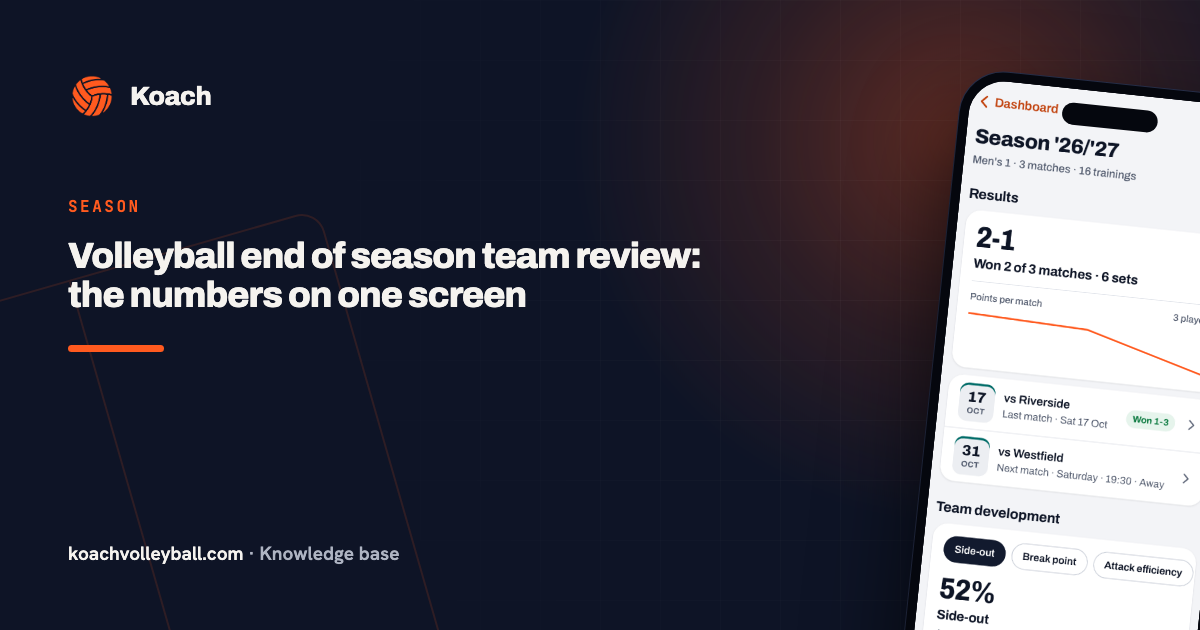
- The results curve: results and set scores in chronological order from the match overview. Did you get better, stay stable or grow tired? The month-on-month line is more honest than the final standing.
- The point mix: did the attack/block/serve distribution shift over the season? A growing serve contribution is practice return in black and white; a shrinking block column is the assignment for next year.
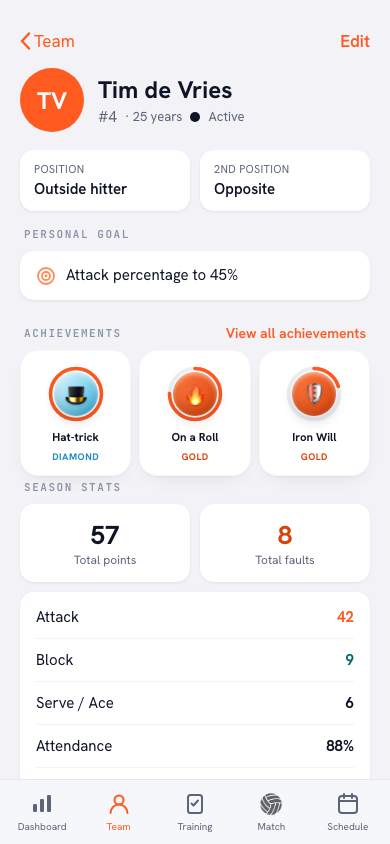
- The player lines: each player's growth chart — who climbed, who plateaued, who carried the season? This feeds the evaluation talks and the team assignments.
- The availability: practice attendance and match attendance as the undercurrent — many 'form' problems turn out on closer inspection to be attendance problems.
The analysis in three sentences
Force yourself into a three-sentence summary: what were we (identity), what got better (return), what was left undone (assignment). For example: "We were a team that won everything at home and started away matches without a chance. Our serve grew from 8% to 14% of our points. Our block stayed the weakest source all season." Whoever can't do it in three sentences doesn't have an analysis yet, just a pile of data.
From analysis to next season
The season analysis is the founding document of the new campaign: the weakest point source becomes the emphasis of preseason, the player lines steer the promotion advice, and the availability picture decides whether your squad needs to grow. Combine it with the team evaluation — numbers and conversation together — and next season doesn't start at zero but at lesson one.
Analyze per half-season. The team of September is not the team of March: injuries, growth and fatigue distort year averages. Comparing the first half against the second brings the real trends to the surface.
Frequently asked questions
How much time does a good season analysis take?
One evening, provided the data is there: the match overview and player statistics are already waiting. The time goes into the looking and the three-sentence summary, not the collecting.
What if the season changed character halfway through (new players, injuries)?
Cut the analysis at that break point: before and after the change are two different teams. Averaging trends across the cut is the classic way to draw the wrong conclusions.
Do I share the season analysis with the team?
The headlines, yes — the three sentences plus the most striking trends belong in the season wrap-up. Individual lines you discuss one-on-one; the team identity you discuss with the group.


Try it yourself in Koach
Less admin, more coaching — starting at your next practice.
Get started with KoachOr read first what the volleyball coaching app does.