
Understanding and using volleyball statistics as a coach
Statistics don't turn volleyball into math — they turn your gut feeling into an instrument. The art isn't collecting more numbers, but letting the right ones weigh in. This is the guide: what to measure, what it means and what to do with it.
The four numbers that matter
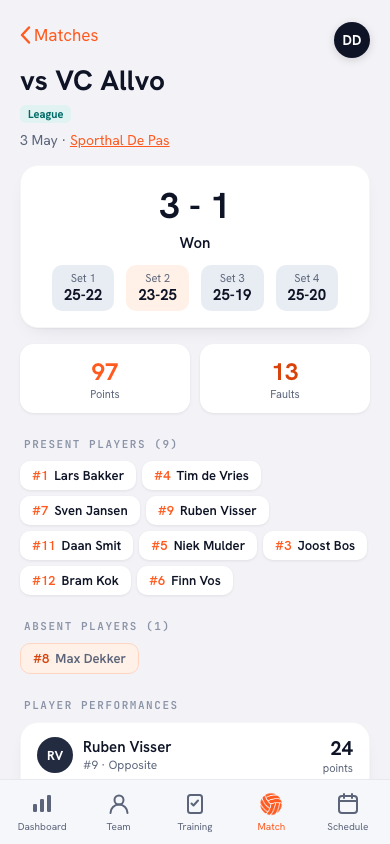
At amateur level, four measurements are all you need — every one of them a by-product of live match tracking:
- Points per player, broken down into attack, block and serve — who delivers, and how?
- Errors per player — the other side of the ledger; see error load.
- Earned points versus gift points — what do you force, what do you get handed? See tracking opponent errors separately.
- Attendance and effort — the context every match number has to be read in.
The three rules of reading
- Trend over snapshot. One match is noise; three matches are a direction; ten are a profile. React to lines, not to dots.
- Ratio over total. 17 points with 8 from blocks tells a different story than 17 from attack. The mix defines the player — see the strength analysis.
- Context over number. A dip next to an injury note is recovery, not loss of form. Numbers without a story are more dangerous than no numbers at all.
From number to decision
Statistics only become coaching when something changes. The translation per area:
- Lineup: the top-scorer list and the ratios decide who gets the ball on the big points — and the score progression shows whether that actually happened.
- Practice: a team that barely scores from serve knows its practice focus. The lowest number sets the program.
- Conversations: players accept numbers faster than opinions — as long as you offer them as a mirror, not a report card. See the evaluation talk.
What not to do
Don't tally every rally across seven dimensions — nobody keeps that up, and the extra detail rarely changes your decisions. Don't rank players publicly — numbers motivate individually and poison collectively. And don't measure without giving back: a team that never sees anything come out of the statistics stops believing in them. Share one insight every week; that keeps the system alive.
Start with one question, not with all the numbers. 'Why do we lose third sets?' or 'who scores when it's 20-20?' — a concrete question suddenly turns the same statistics into answers.
Frequently asked questions
Which statistic matters most if I can only pick one?
Points per player broken down by type, across multiple matches. It shows production, role distribution and development — it's the mother statistic everything else builds on.
How many matches do I need for reliable numbers?
Three matches for a first direction, eight to ten for a reliable profile. Be careful with big conclusions before that — especially for players with little court time.
Should I share statistics with the whole team?
Share team patterns with the group and individual numbers one-on-one. A top-scorer list in the group chat looks motivating but demotivates everyone outside the top three.
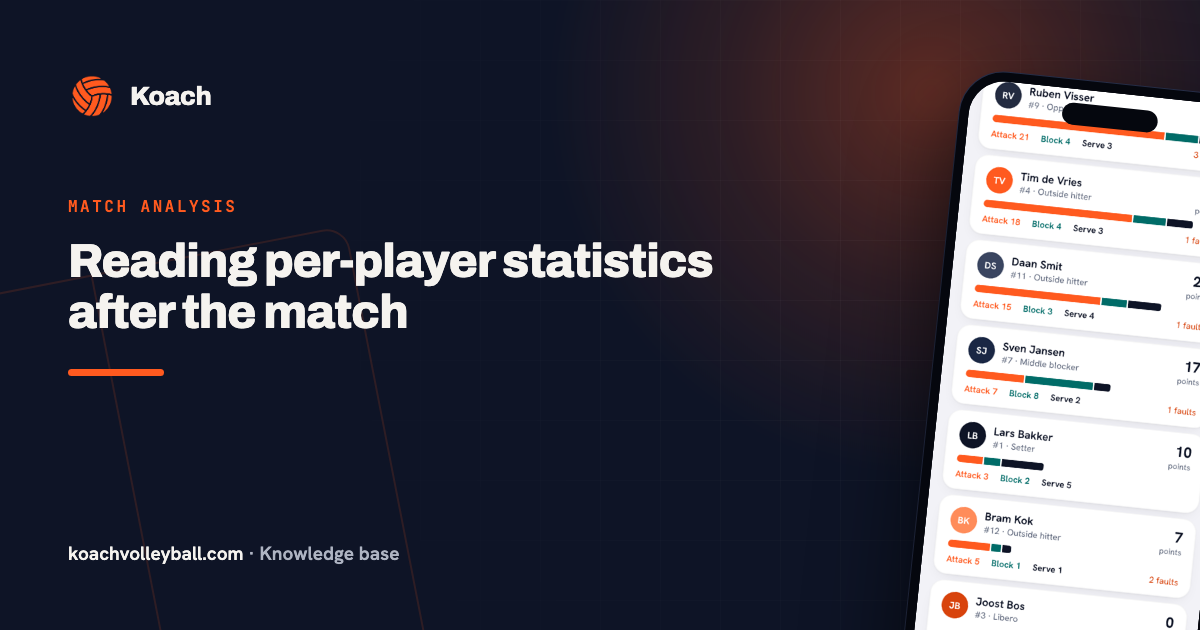 Reading per-player statistics after the match
 Season analysis: trends across all your matches
 Free volleyball statistics app: what you get for free (and when you want more)
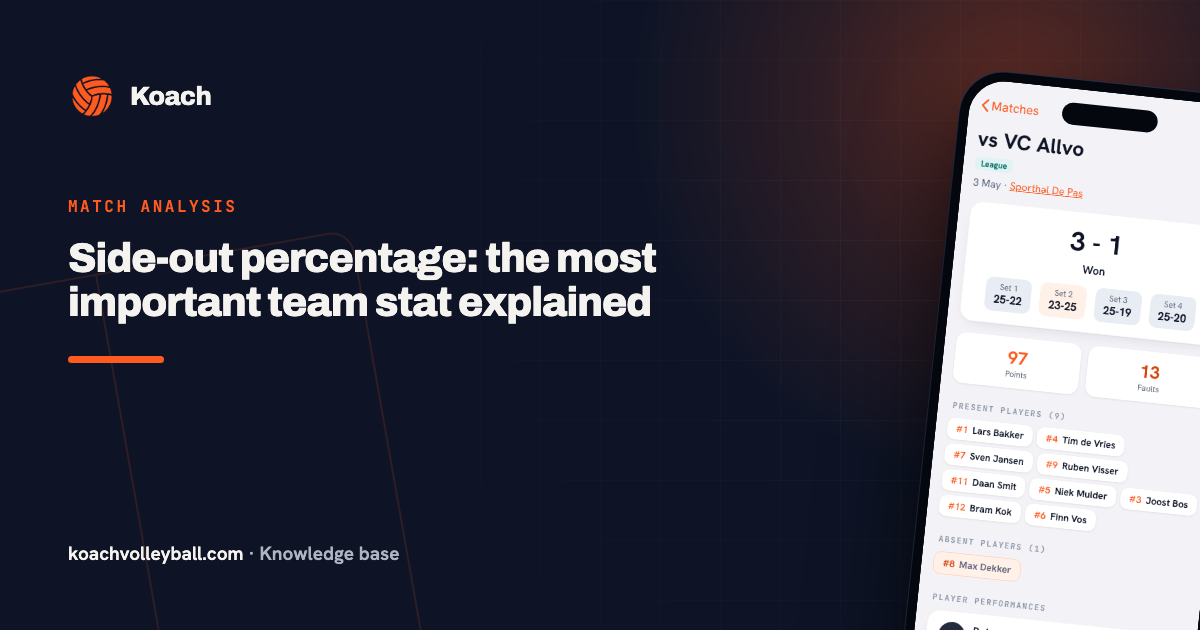 Side-out percentage: the most important team stat explained
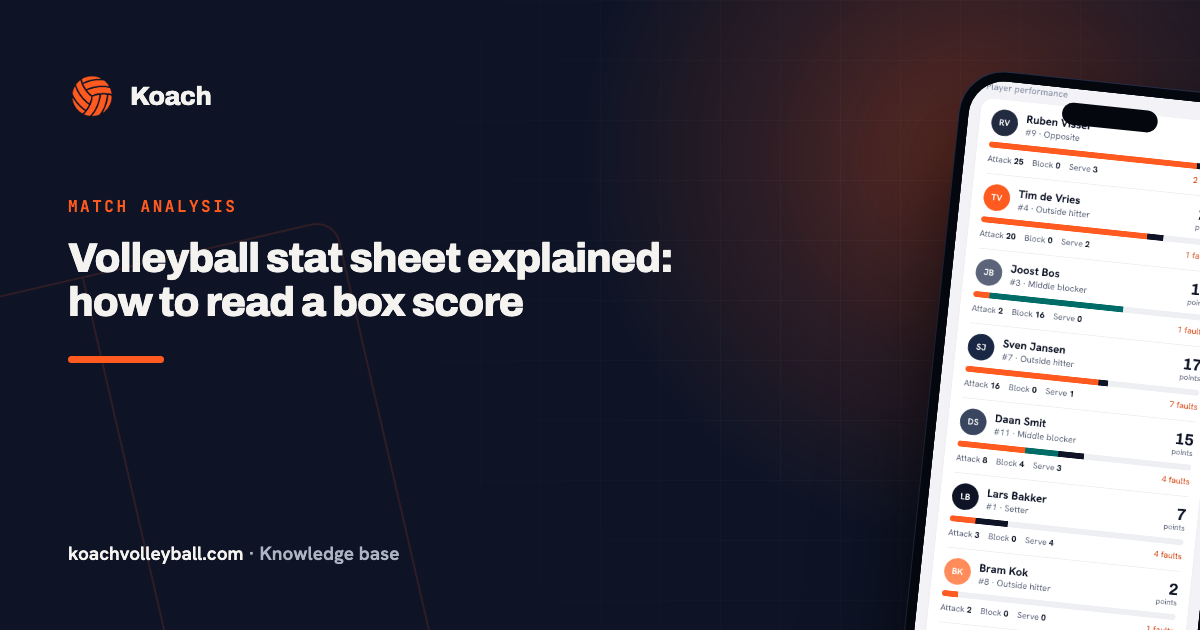 Volleyball stat sheet explained: how to read a box score
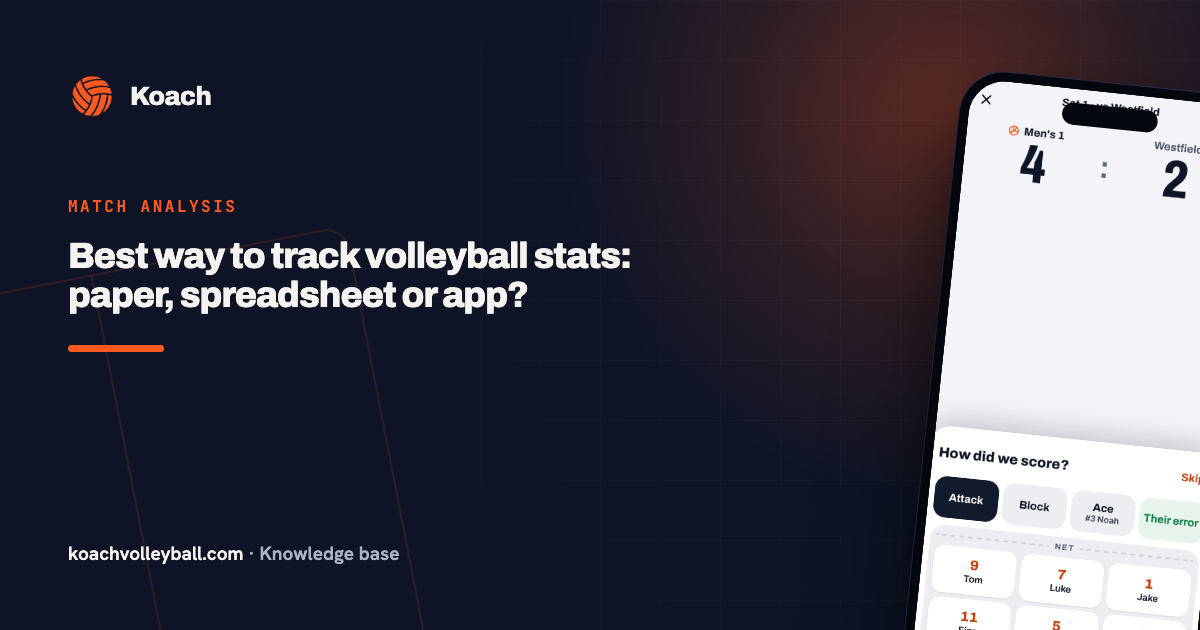 Best way to track volleyball stats: paper, spreadsheet or app?
 AI volleyball stats app: the options, and stats without a camera
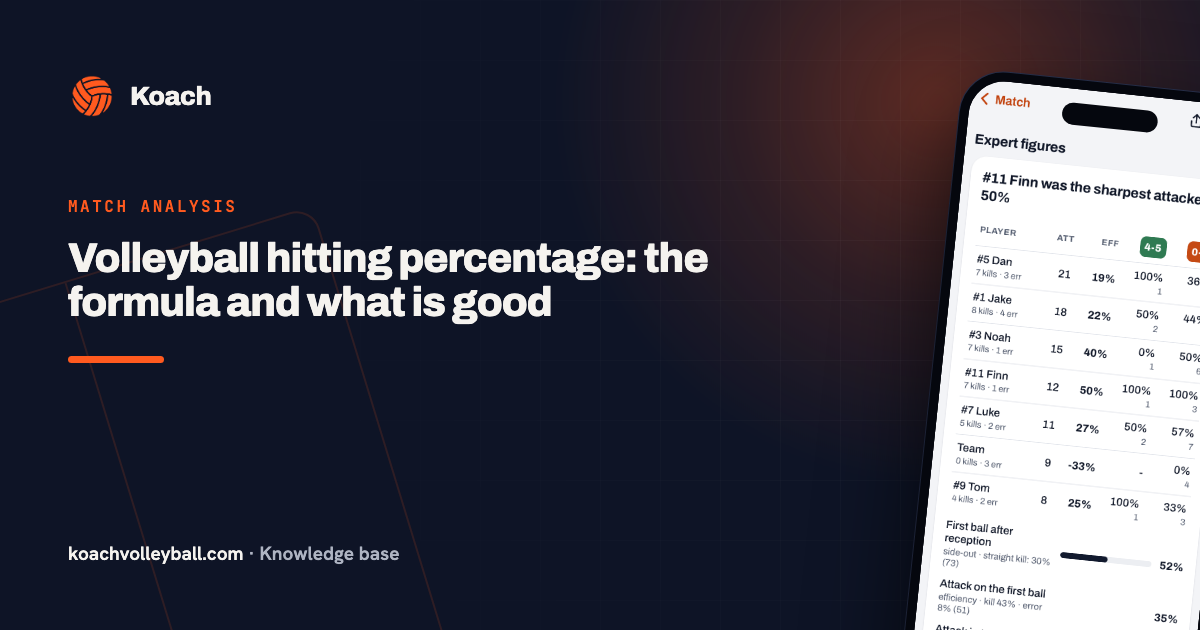 Volleyball hitting percentage: the formula and what is good
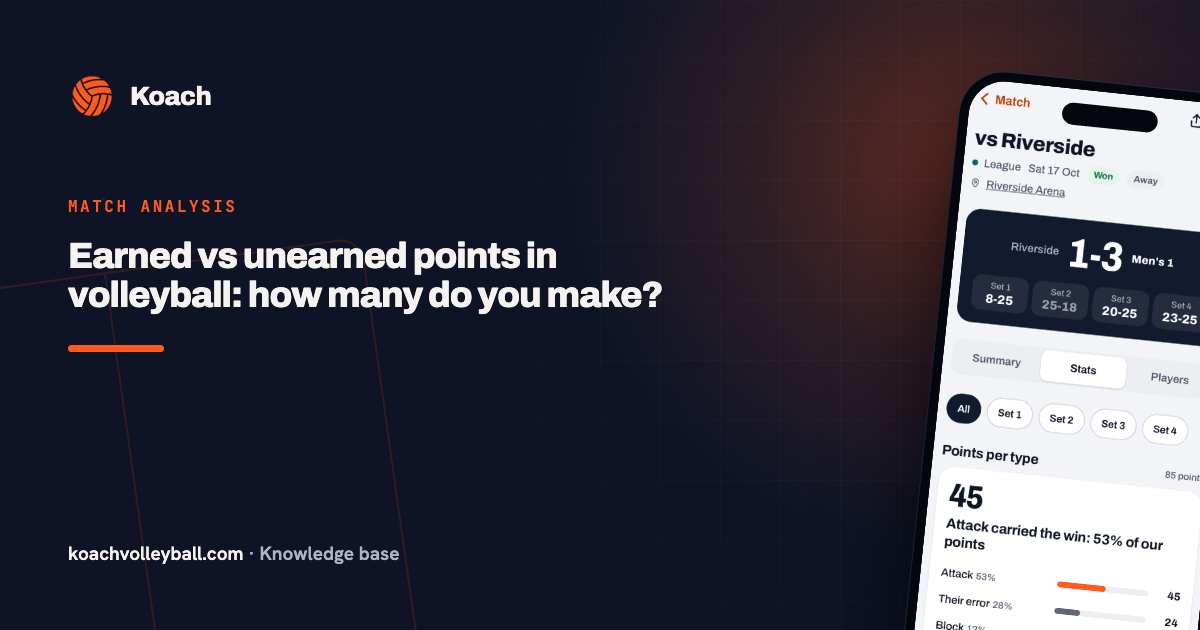 Earned vs unearned points in volleyball: how many do you make?
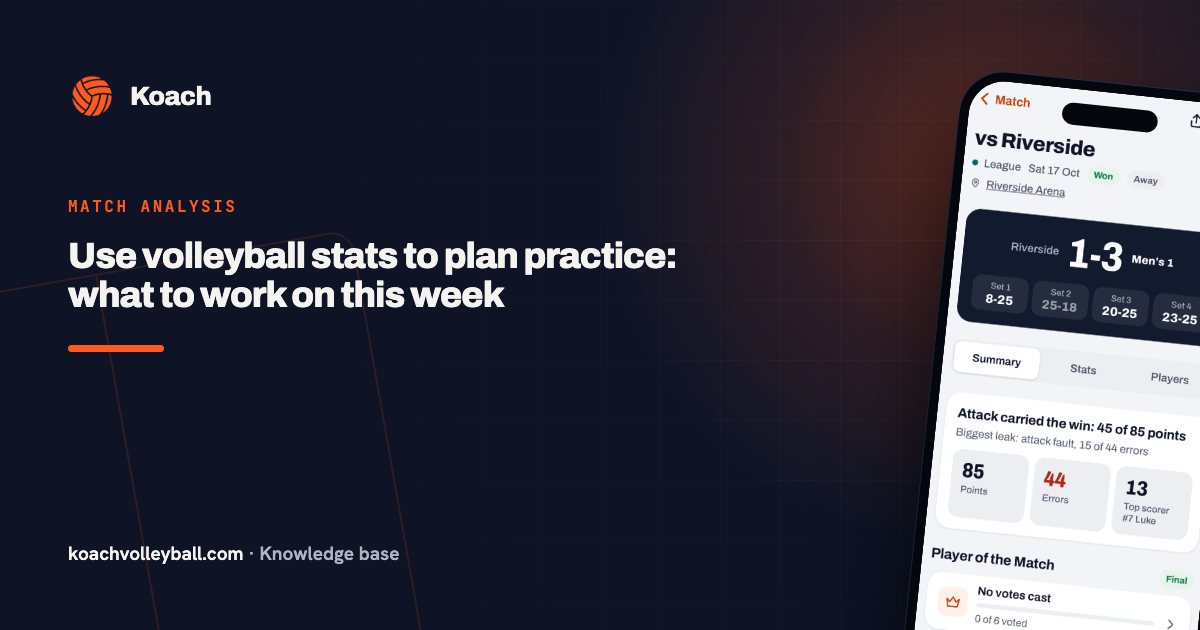 Use volleyball stats to plan practice: what to work on this week
Statistics without the tally sheets
Two taps per point during the match — and Koach builds your complete analysis from them.
Get started with KoachOr read first what the volleyball coaching app does.