
Using time-outs: when and how
Thirty seconds, twice per set: the time-out is the coach's smallest tactical weapon and the most frequently misused one. Too early is a waste, too late is pointless — and sometimes saying nothing is the best plan.
The rules in brief
Each team has two 30-second time-outs per set. You request one (via captain or coach) at a dead ball; play resumes with the same serving turn and rotation. Unused time-outs expire with the set — you cannot carry them over, so you cannot save them up either.
The three classic moments
- Breaking the serving run: three or more points in a row against you on the same server — the best-known and best-proven use. The goal is not your speech, but wrecking that server's rhythm (see also following the serving turn).
- Before the deciding phase: around 20 points in a tight set, to sharpen your attacking plan for the final points — who gets the ball at 23-23?
- The emergency brake: your team plays three rallies like a different team — panic passing, grumbling, chaos. Here you buy a 30-second reset, not tactics.
What to say in 30 seconds
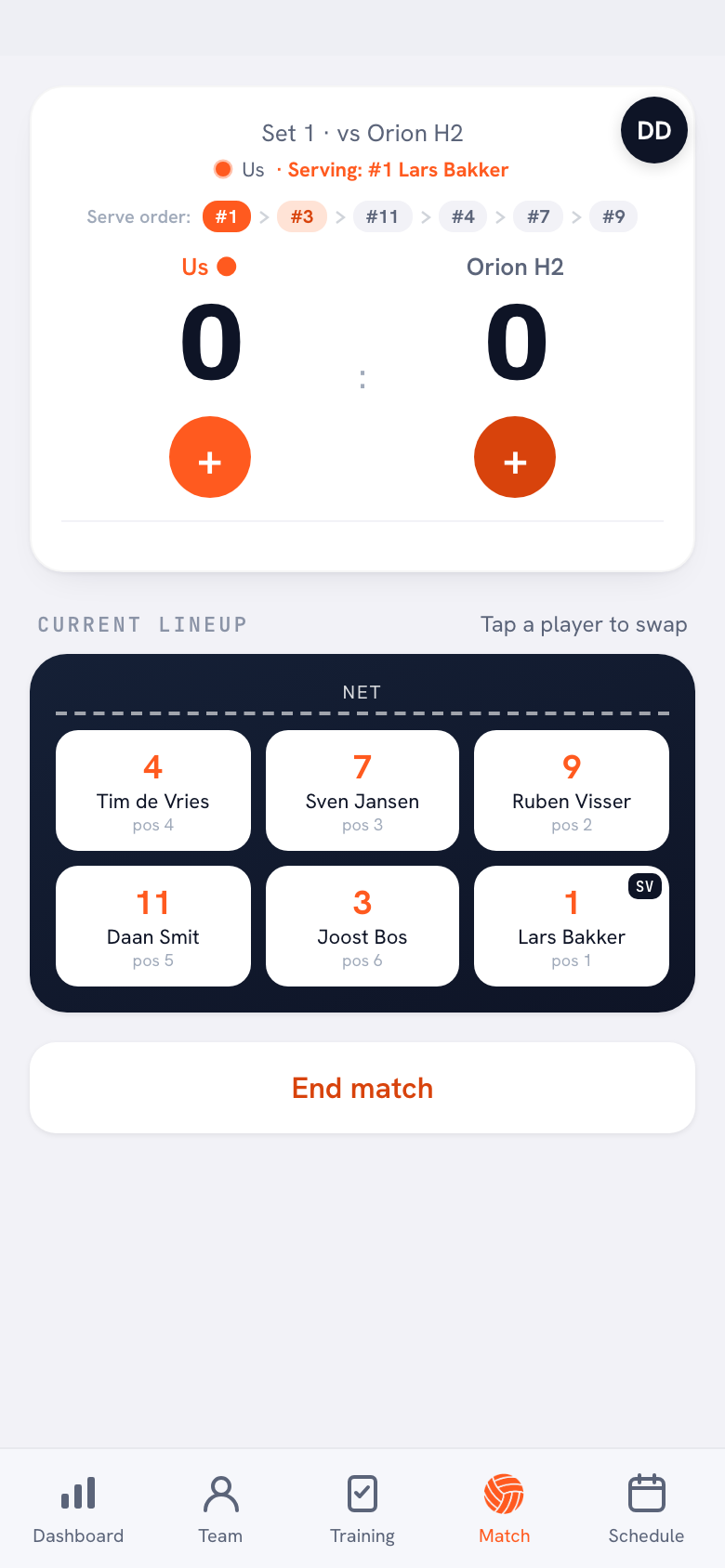
One message, at most two sentences of instruction, and end on a positive. "Their server keeps hitting zone 5 — Tim, you take him. Nothing else is wrong: win the side-out and we are rolling again." Say five things and players remember zero. Before you start, look at your live screen for three seconds: the score, the run and who is scoring today — that is your entire briefing.
Always keep one for after 20. Burning both time-outs before point 15 means watching helplessly through the phase where sets are decided. The second time-out belongs to the endgame — almost without exception.
Frequently asked questions
How many time-outs do I have per match?
Two per set, so a maximum of ten in a five-setter. They expire per set — an unused time-out from set one does not carry over to set two.
Should I take a time-out when the opponent takes one?
No — their interruption is free rest for your team. Use the moment for one short pointer and save your own time-outs for your moments.
Time-out or substitution for a player who is struggling?
Time-out first (a reset without consequences), substitution if it repeats. Save the combination — substitution and time-out at once — for genuine crisis moments; it spends two resources at the same time.


Try it yourself in Koach
Less admin, more coaching — starting at your next practice.
Get started with KoachOr read first what the volleyball coaching app does.